
OpenMV N6 Intelligent AI Camera
产品信息
₹20160
产品描述
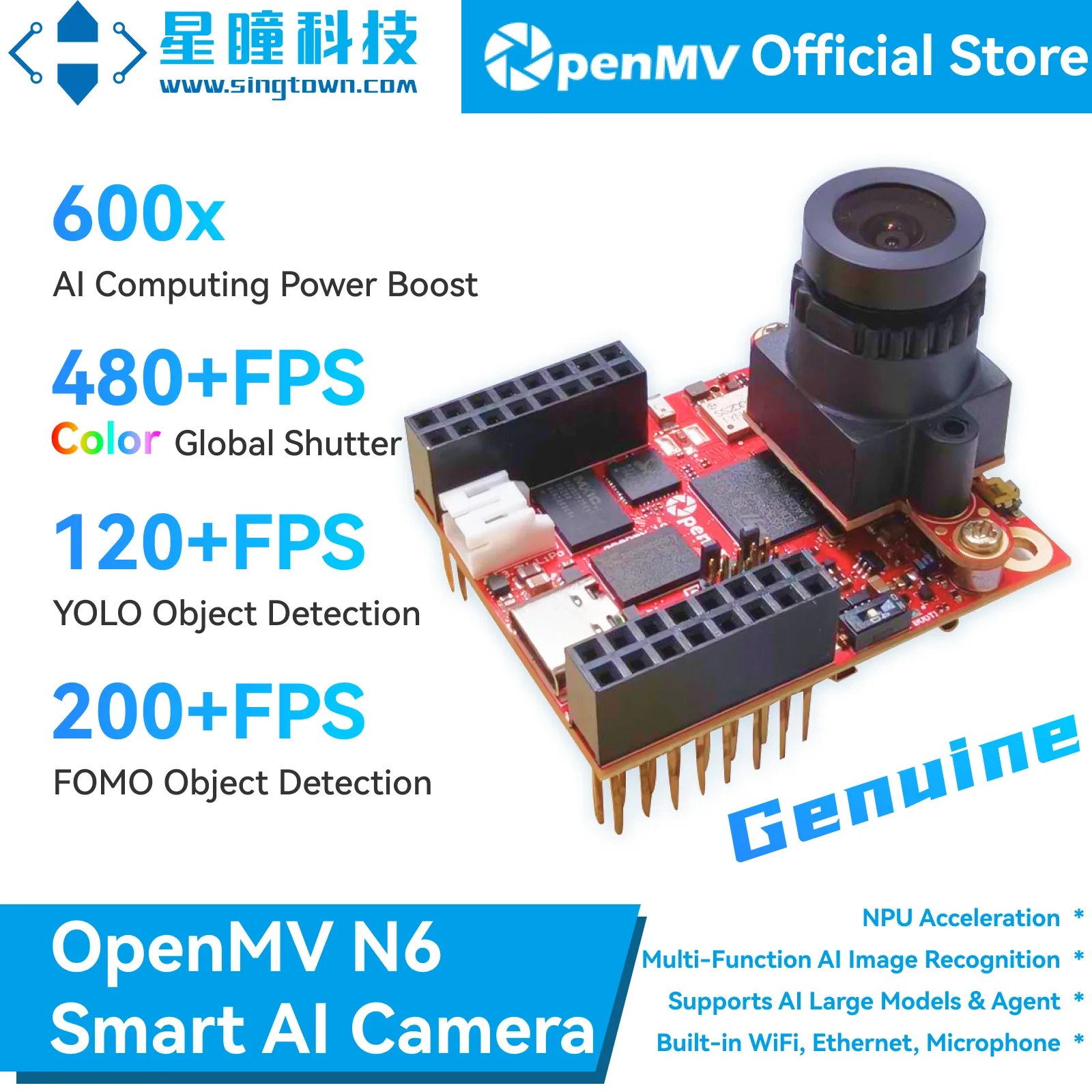
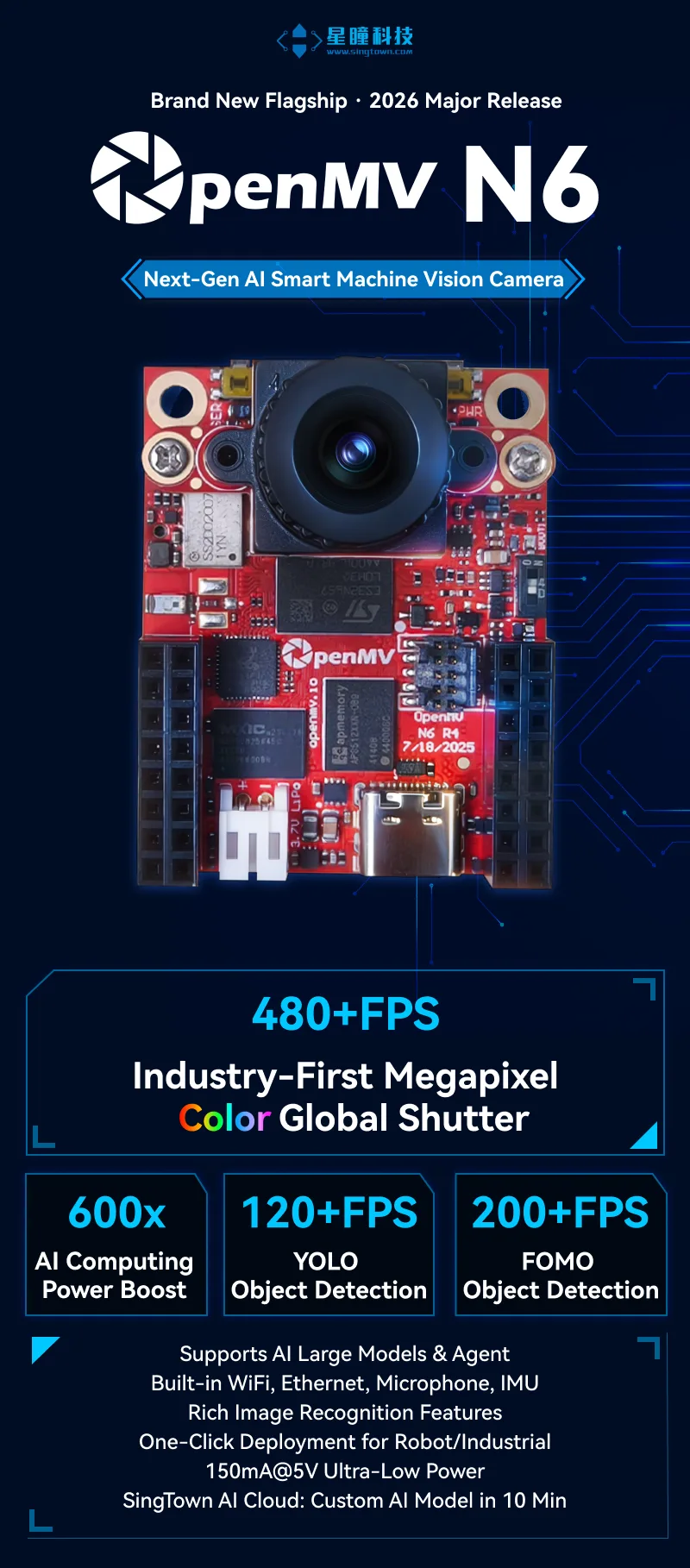
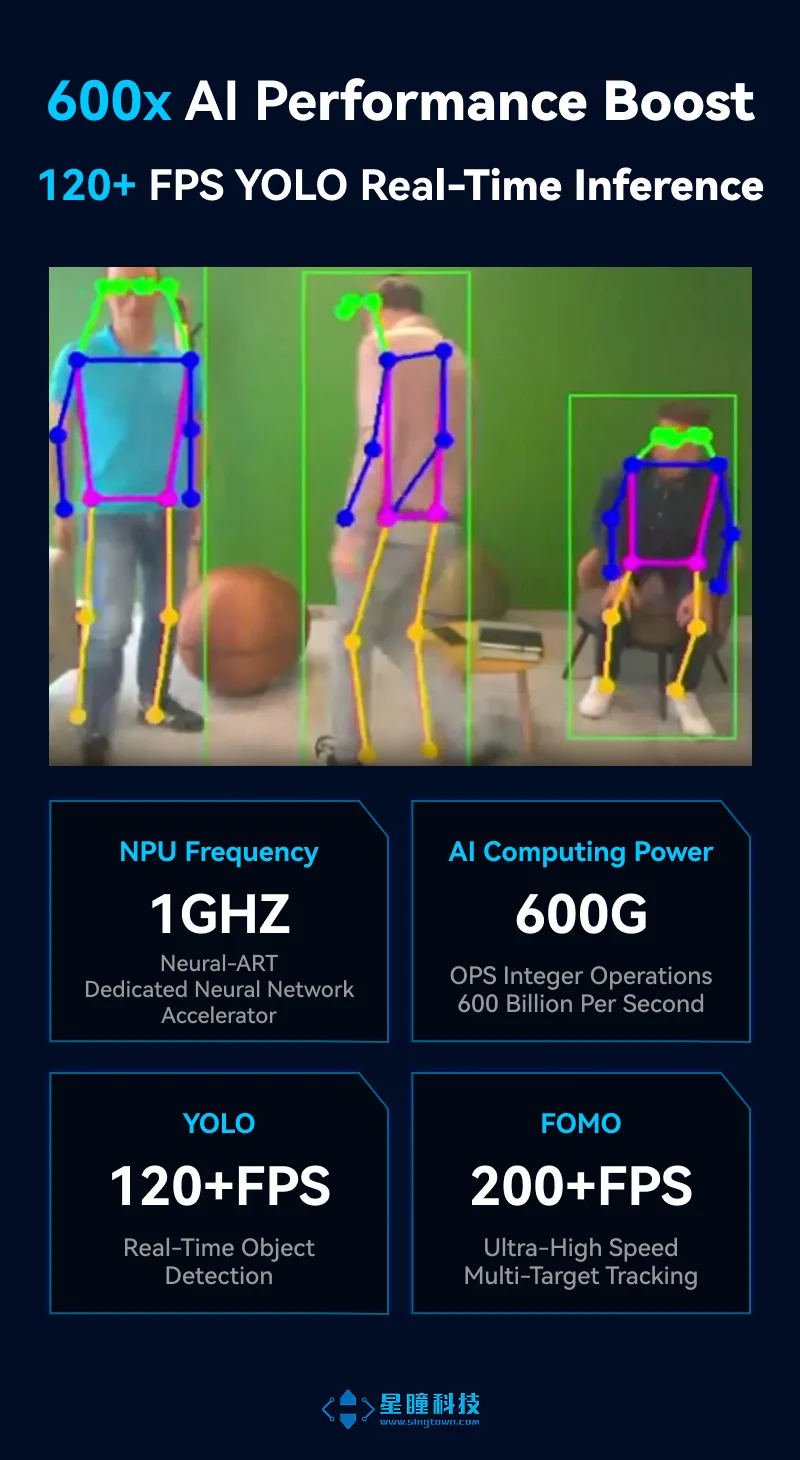
600x AI computing power boost, 480+ FPS color global shutter, 120+ FPS YOLO object detection, 200+ FPS FOMO object detection!
The 2026 latest model OpenMV N6 high-performance AI intelligent image recognition camera is now officially on sale!
- Supports AI large models and Agent collaboration;
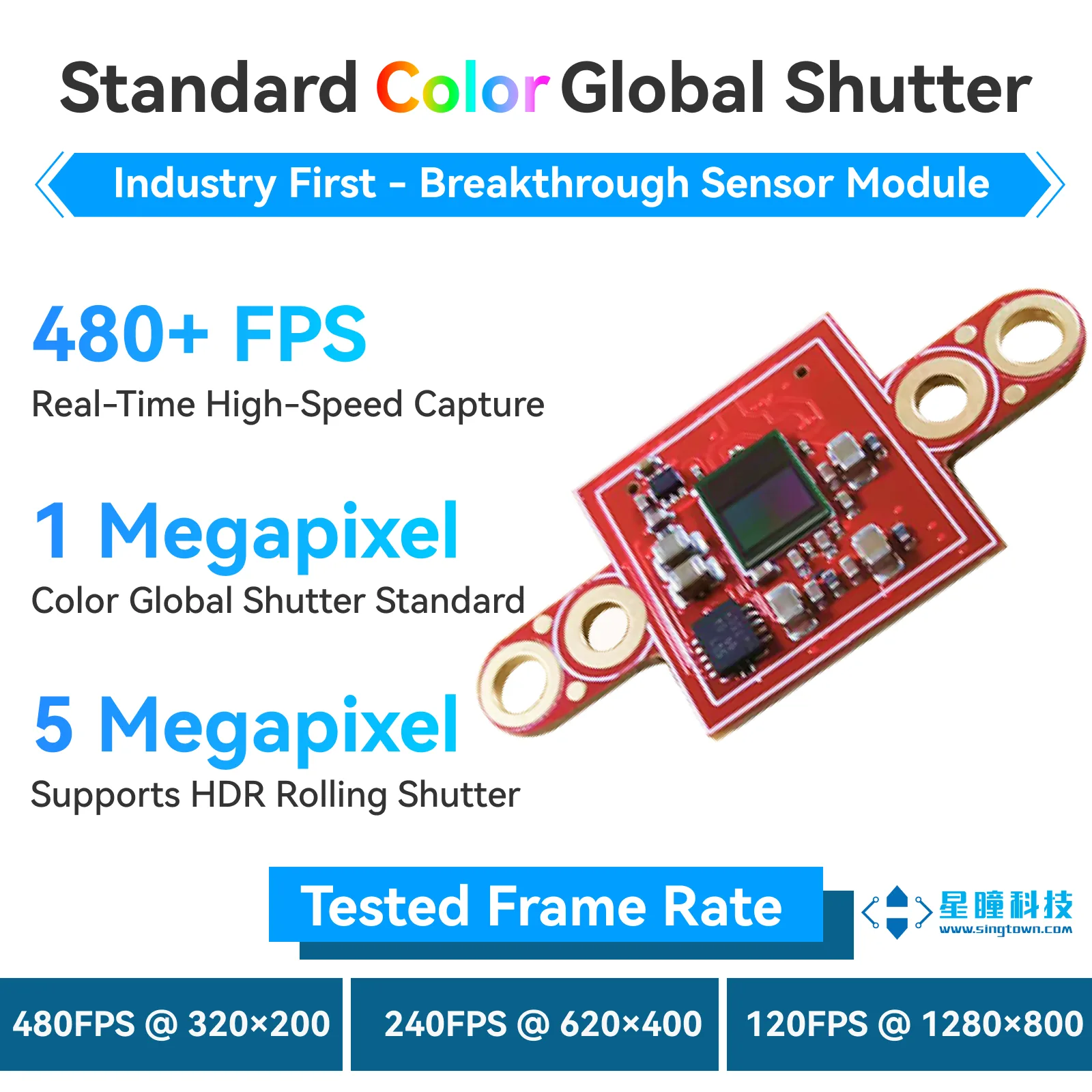
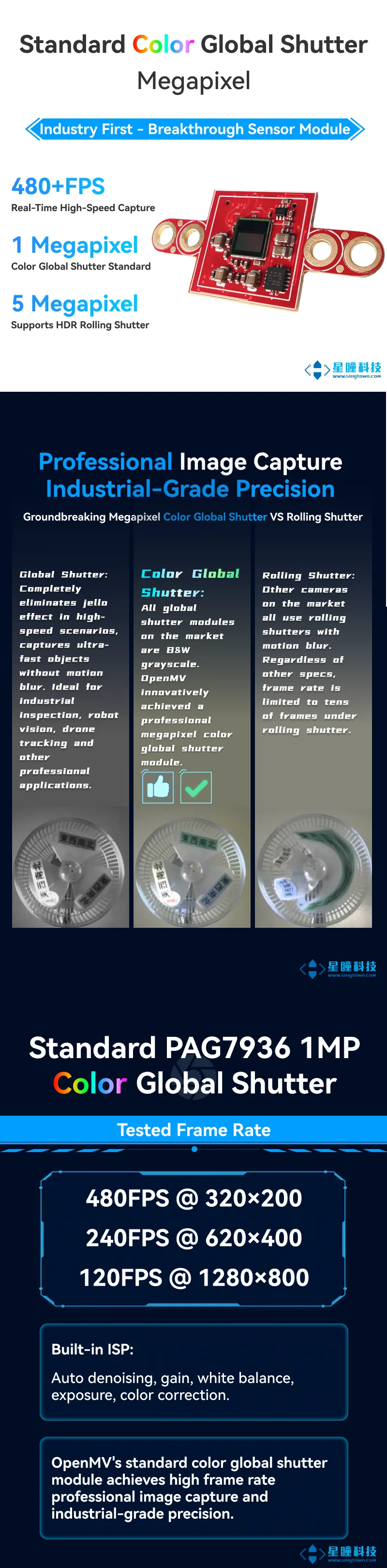
- Standard with 480 FPS megapixel color global shutter – captures and recognizes ultra-high-speed moving objects;
- 120+ FPS YOLO object detection for high-speed execution of complex AI algorithms, with voice recognition support;
- Built-in WiFi, Bluetooth 5.1, Ethernet, microphone, and IMU;
- Built-in H.264 and JPEG hardware encoding acceleration, supports MP4 recording and network streaming;
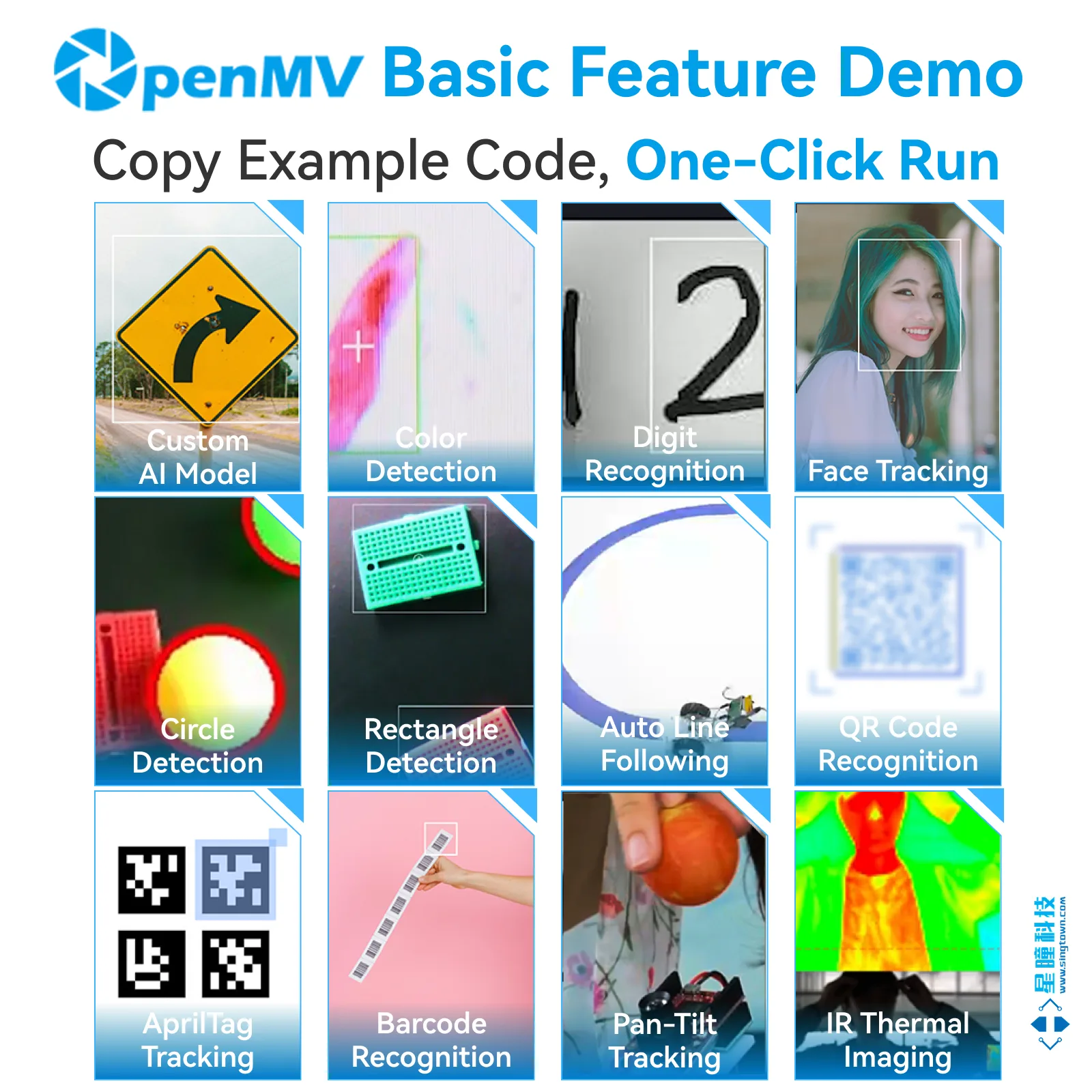
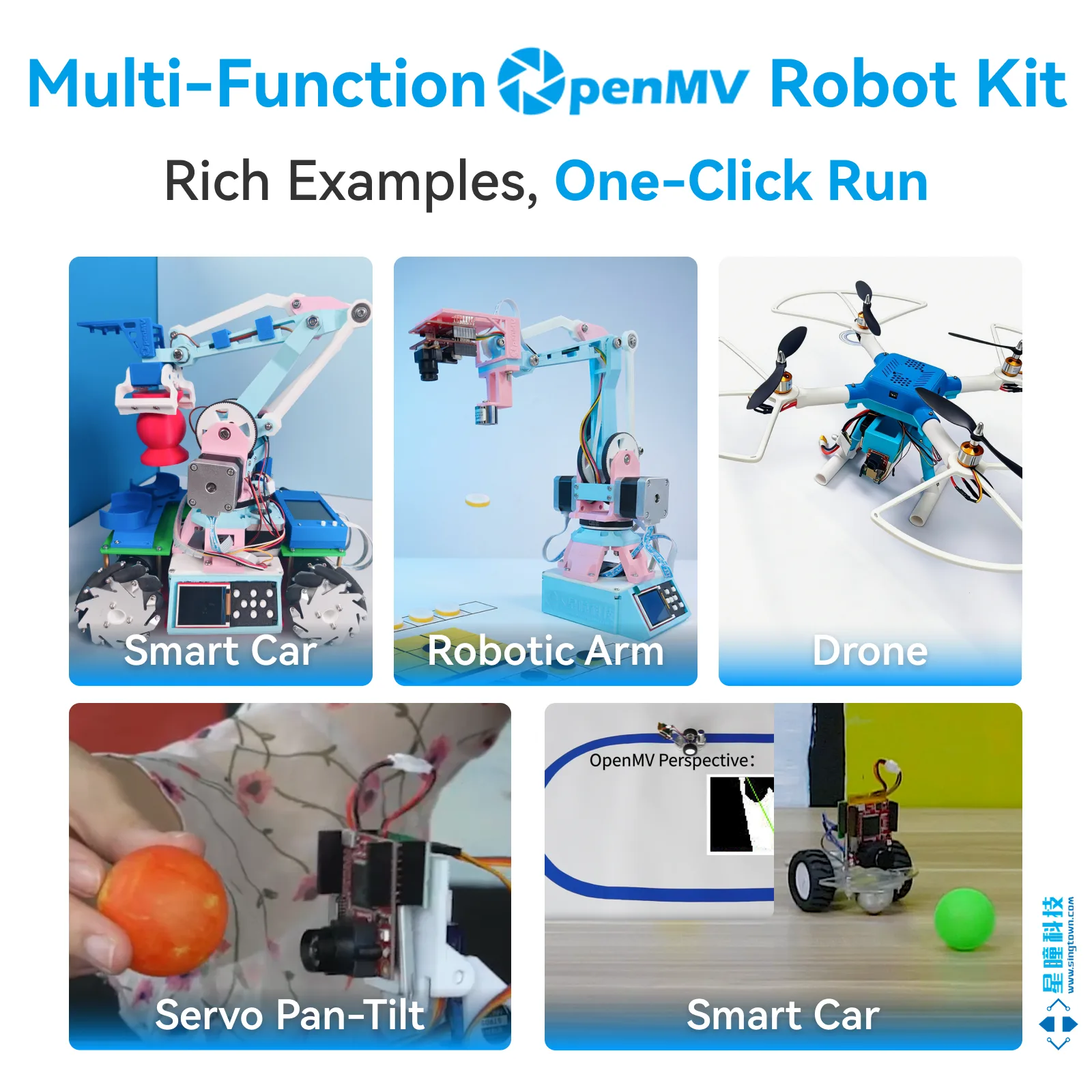
- Comes with official robot kits (robotic arm, drone, smart car, gimbal, etc.) – copy the code and run with one click!
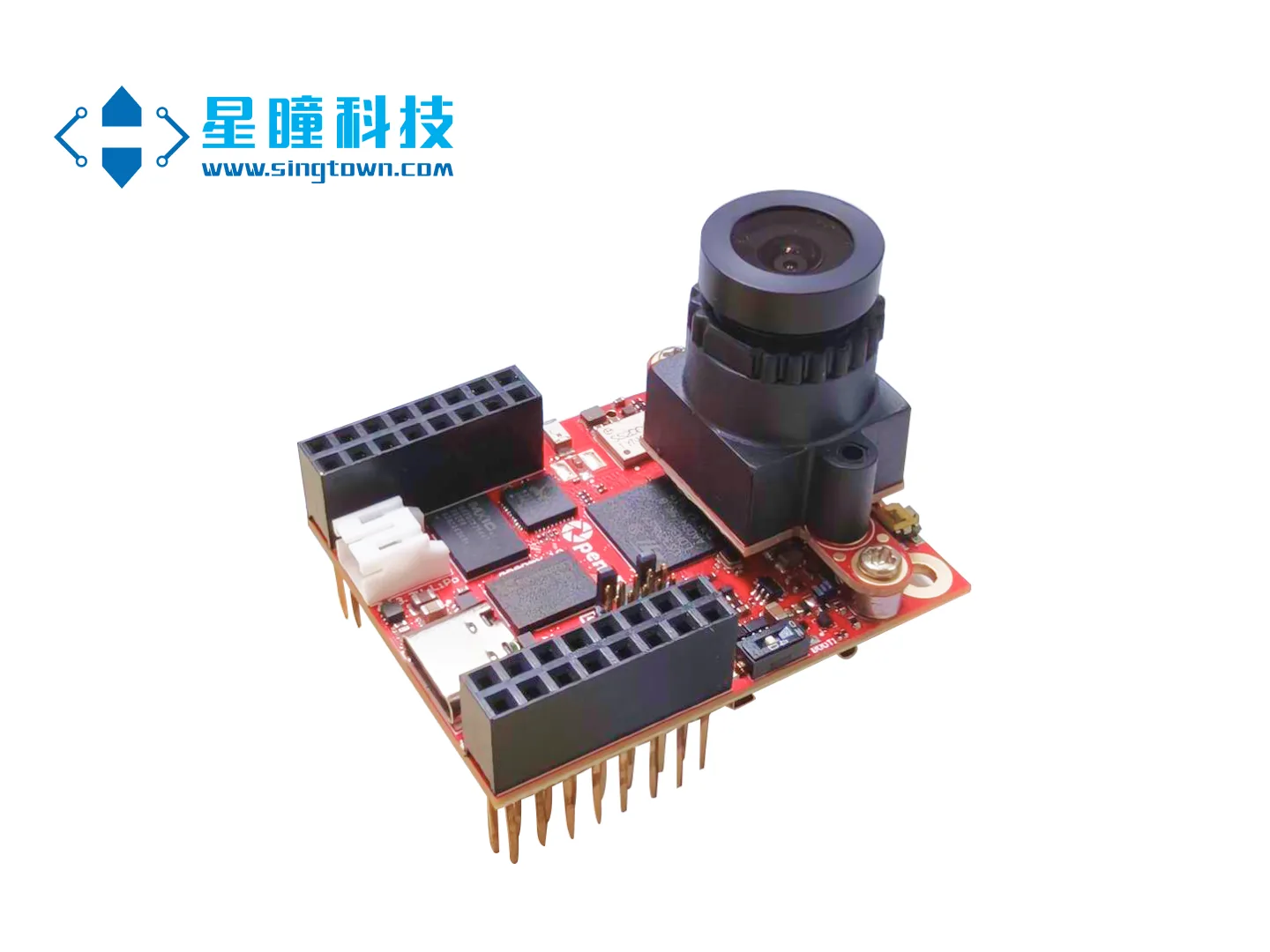


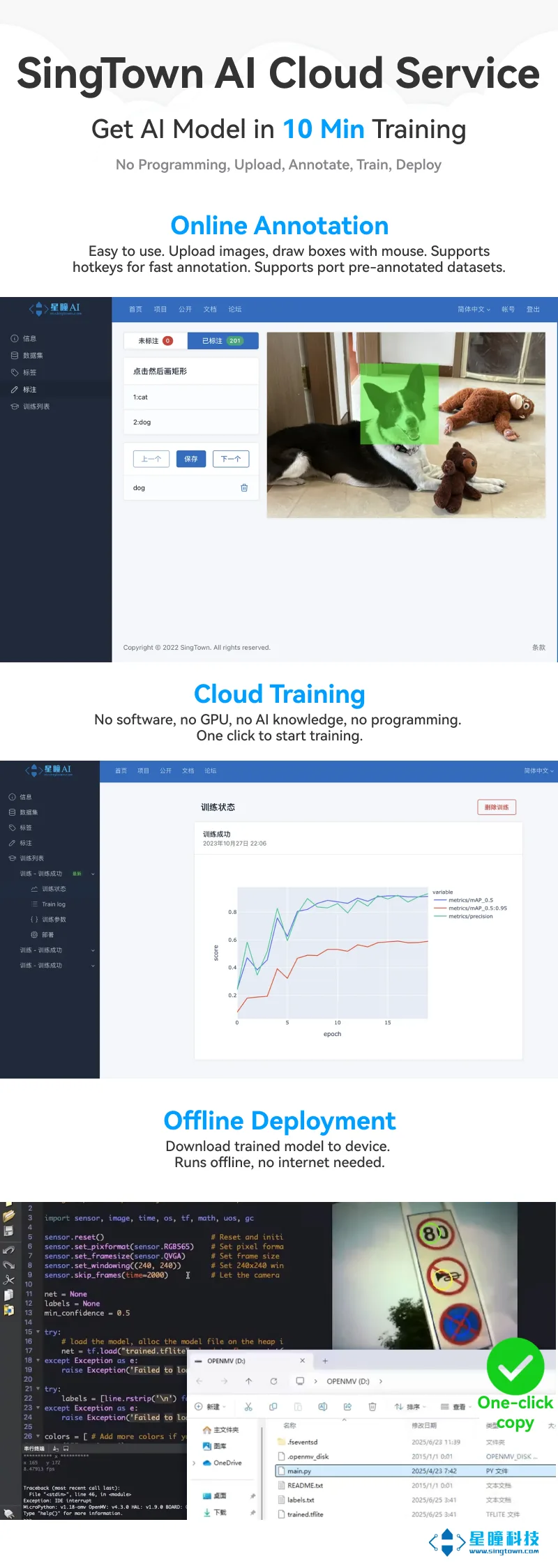
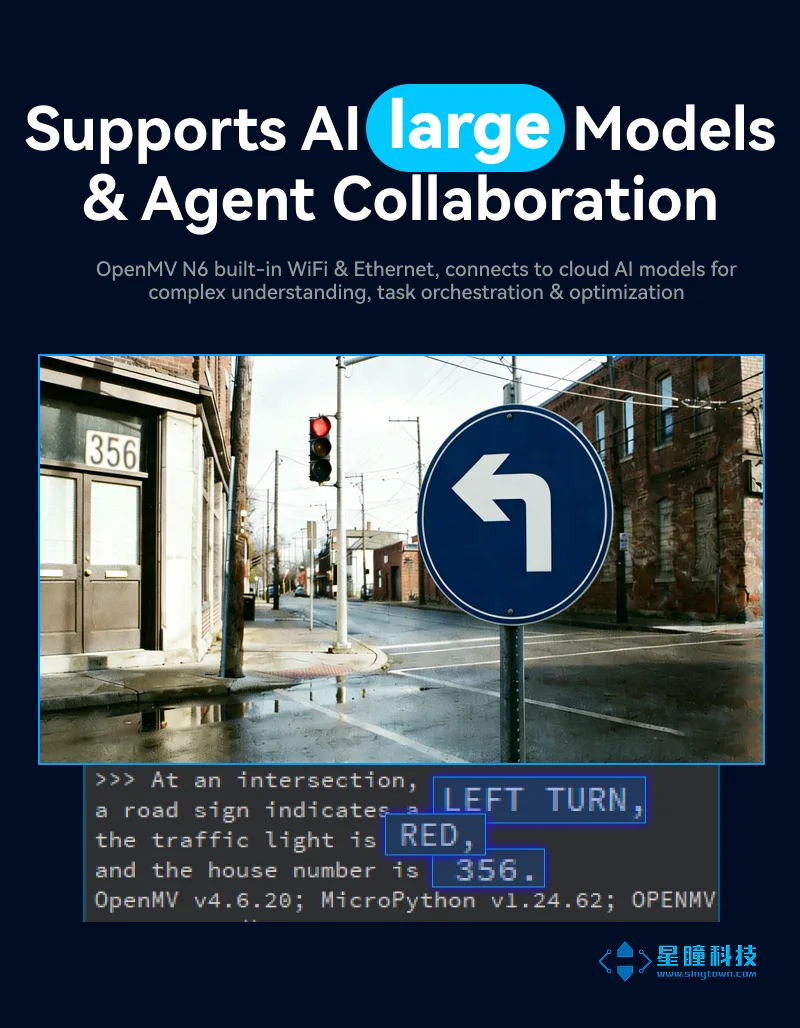
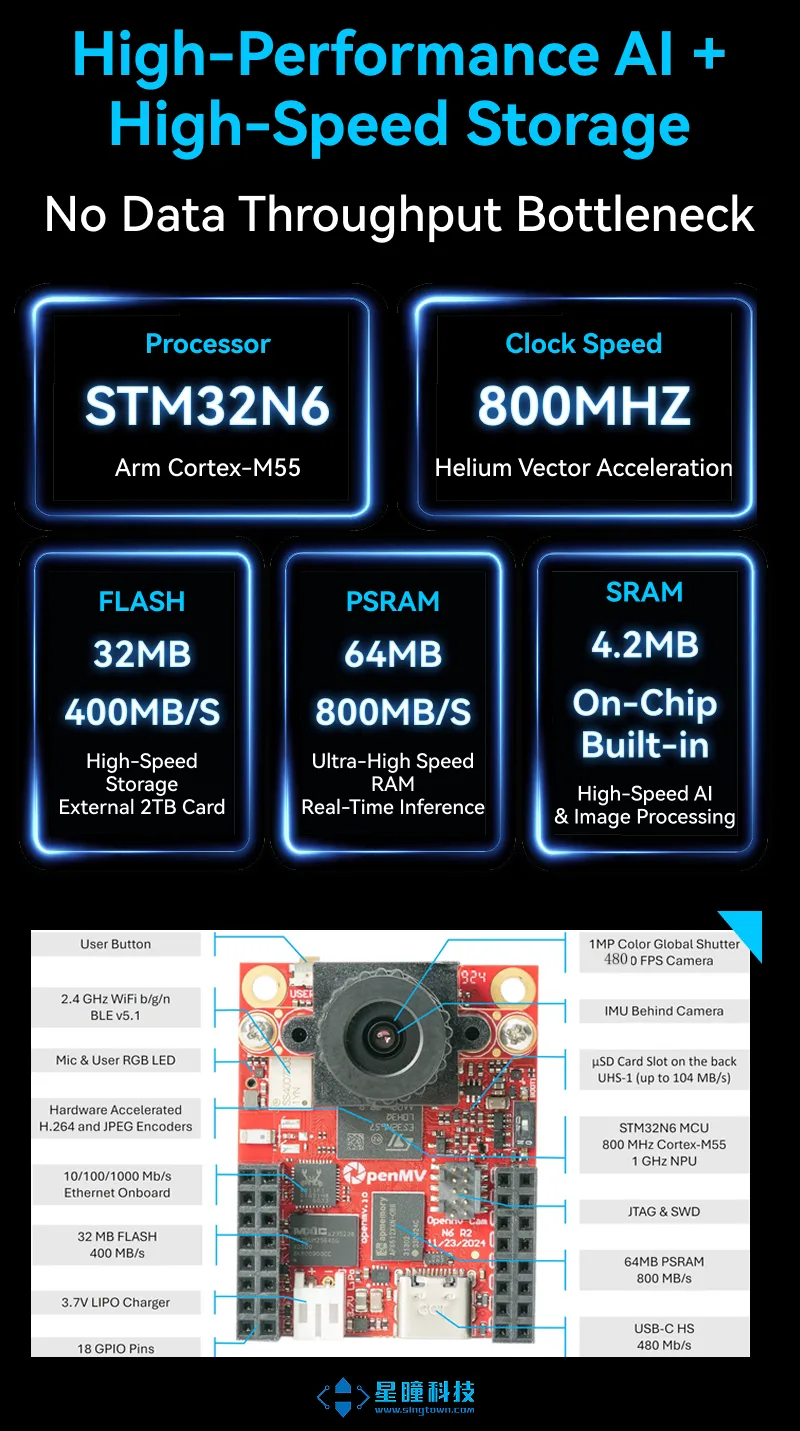
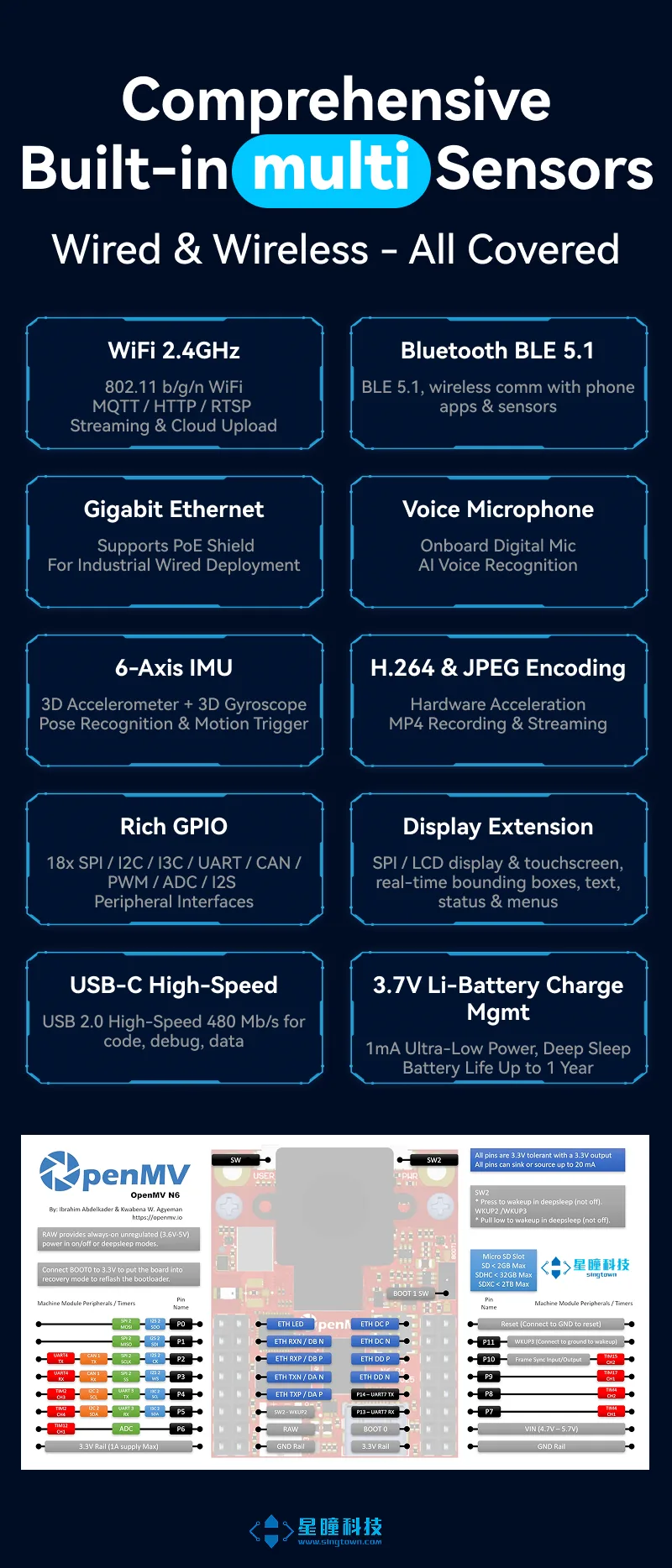
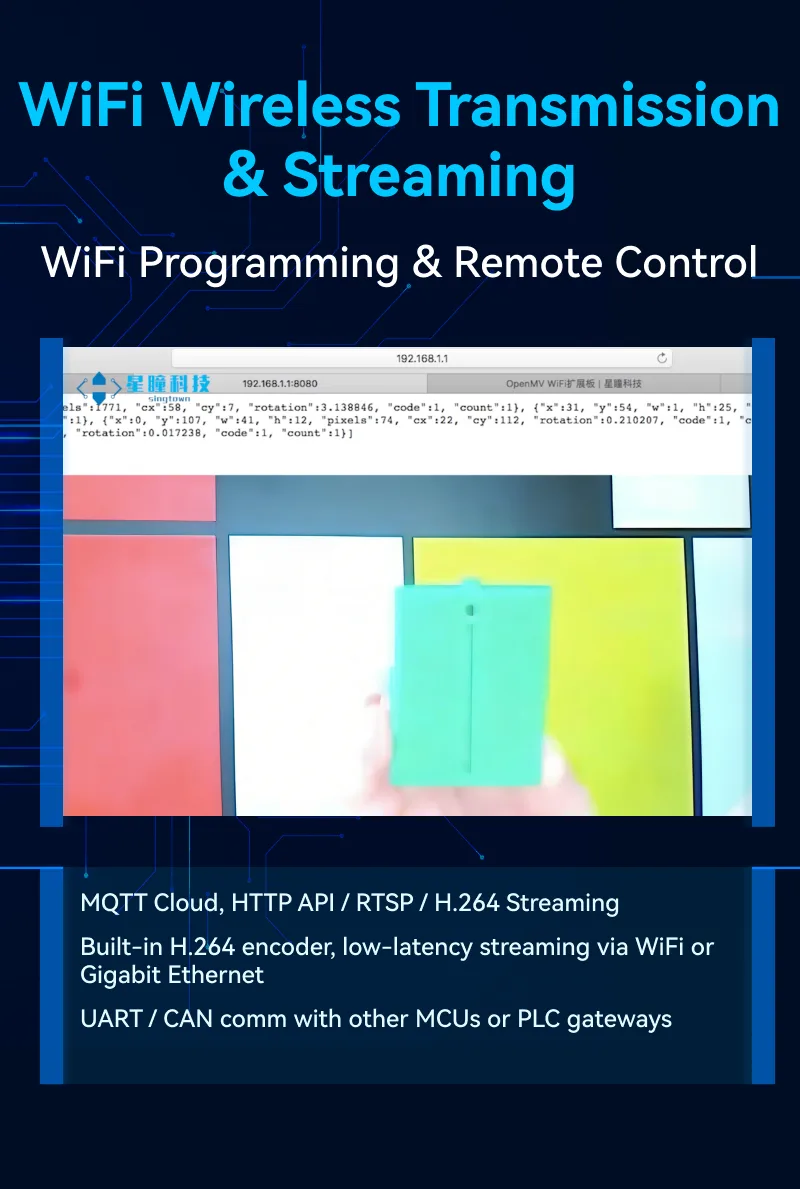


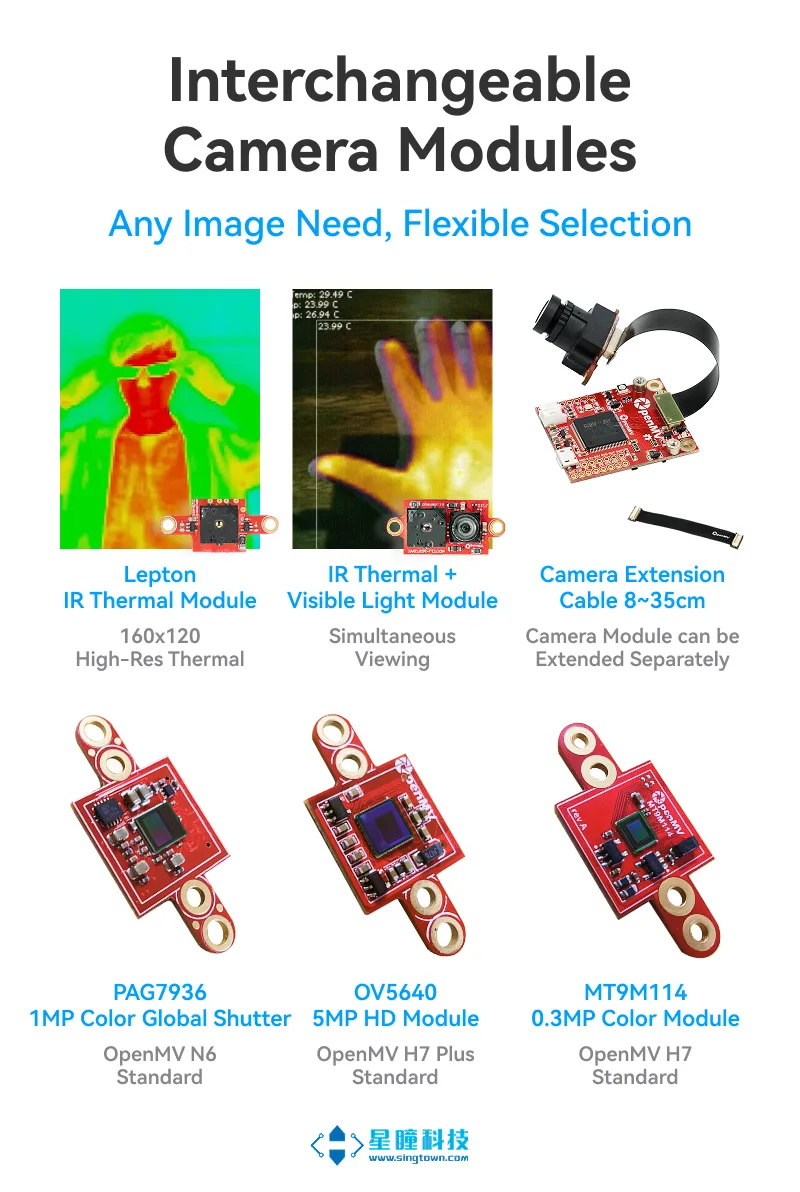
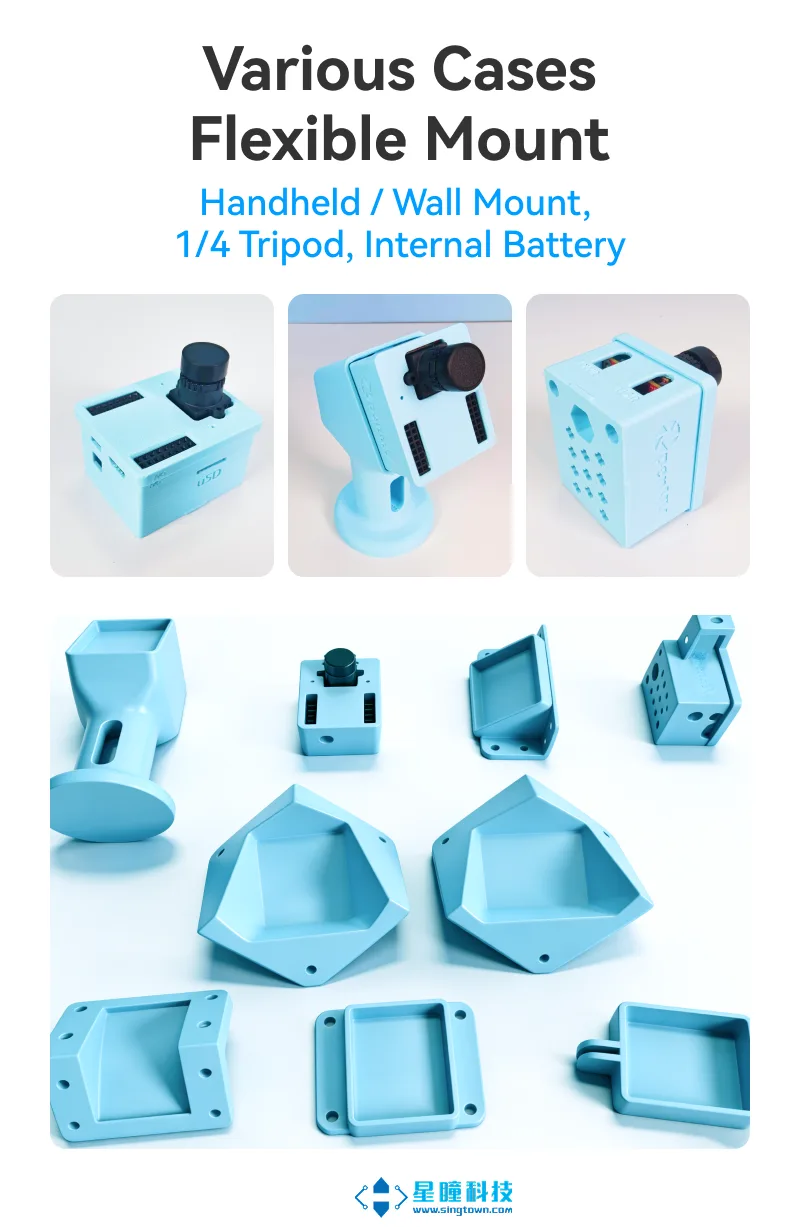
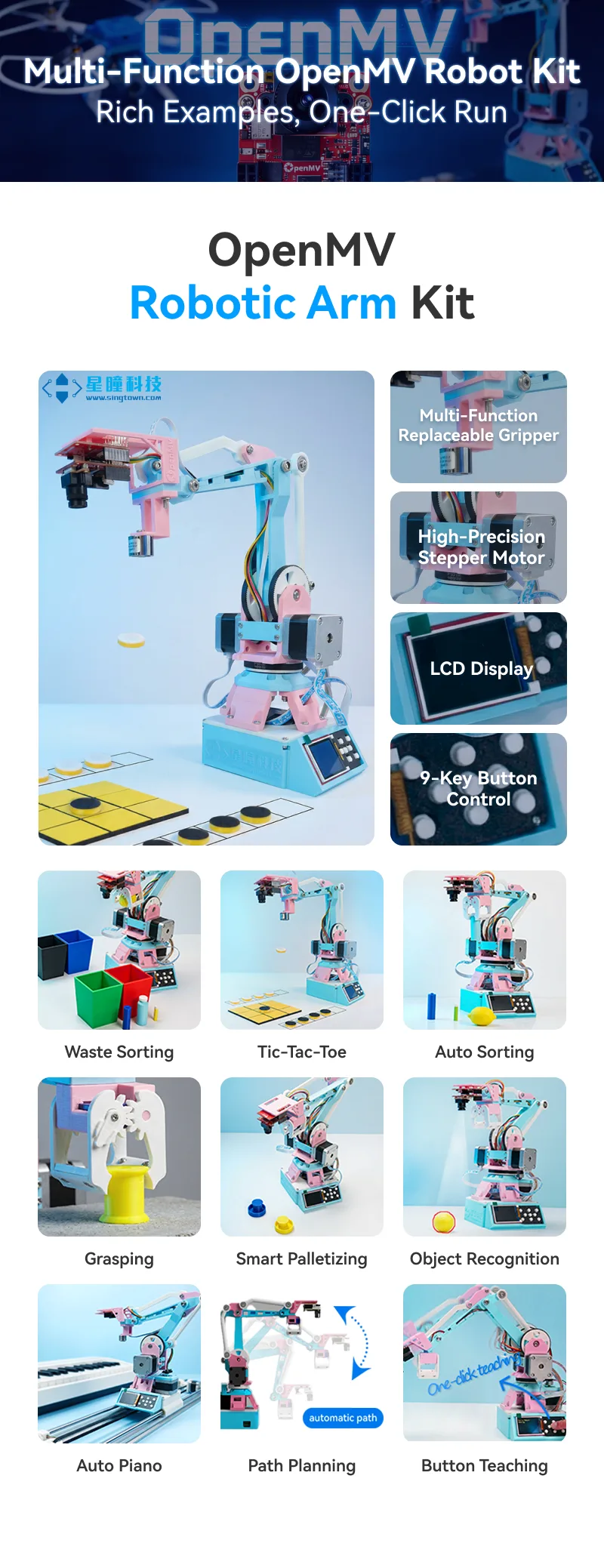
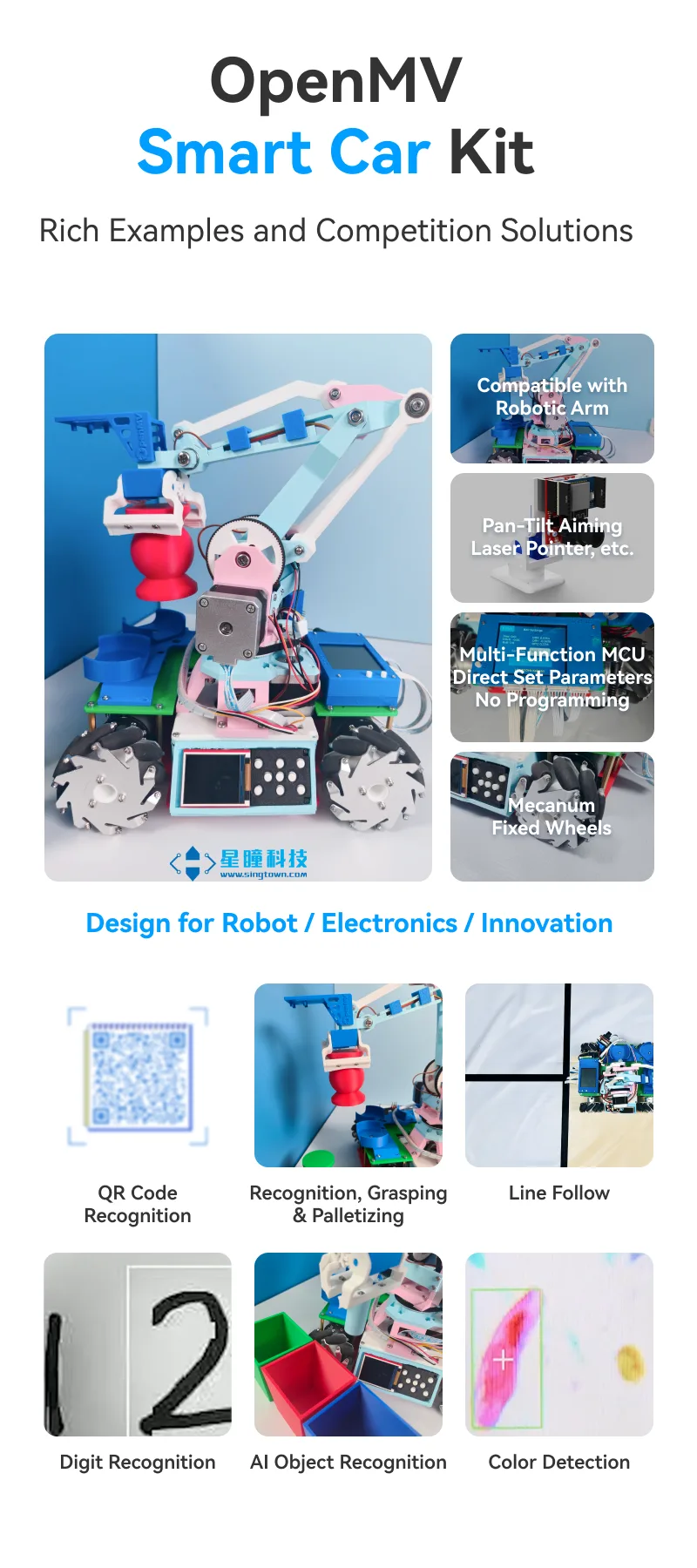
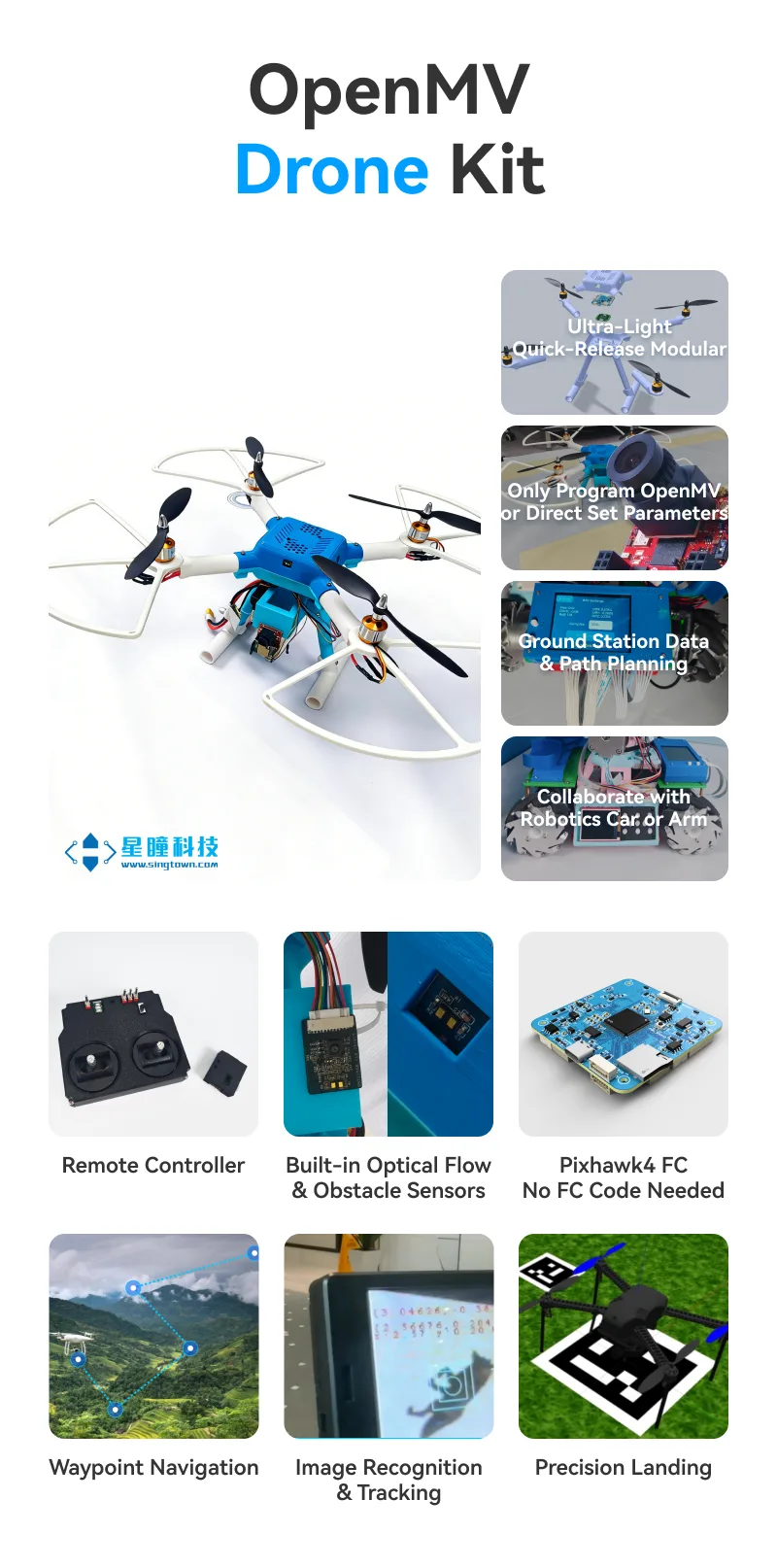
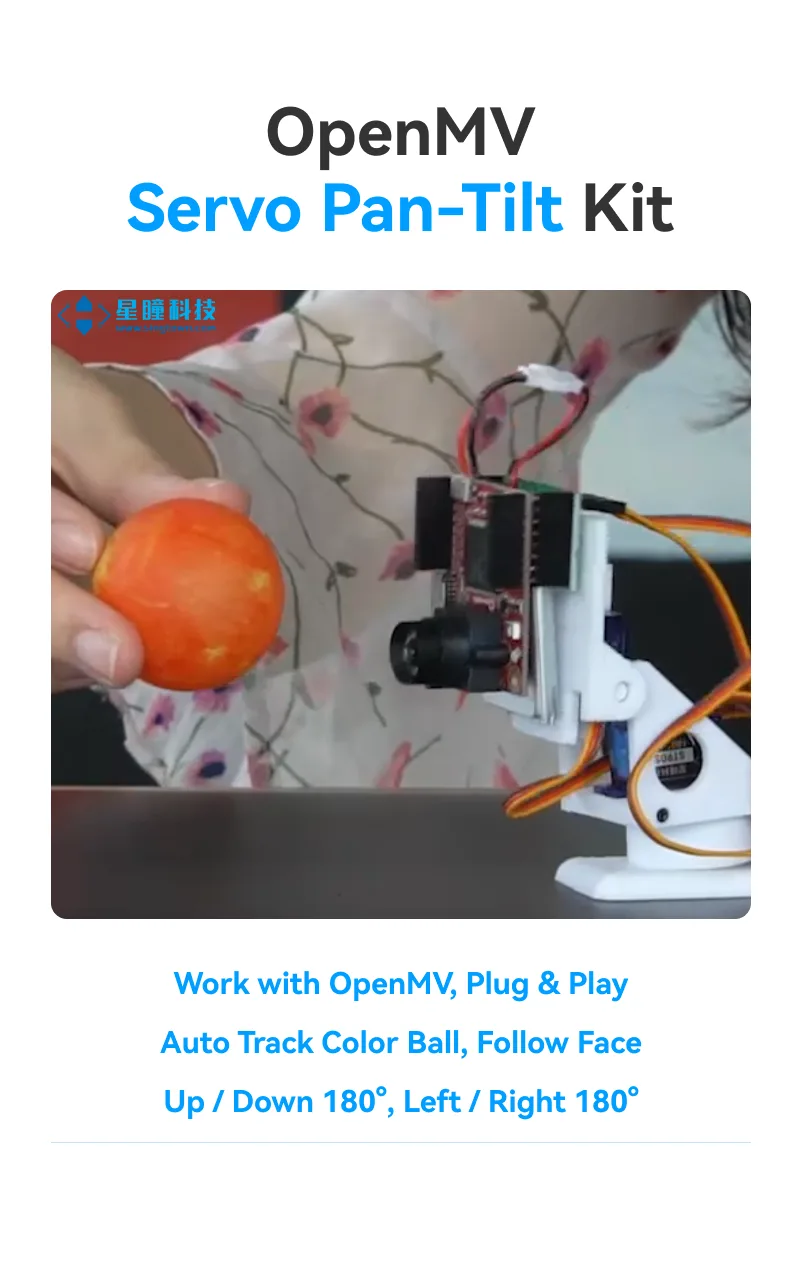
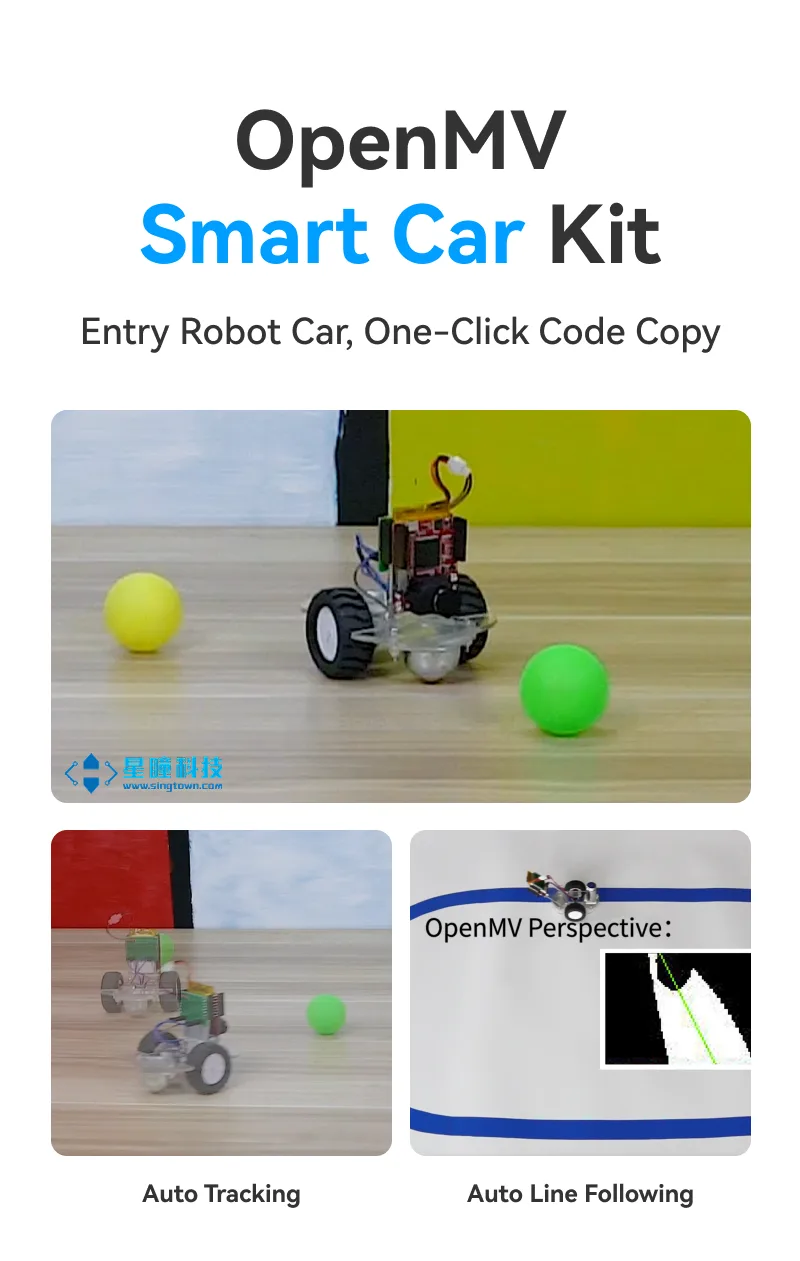
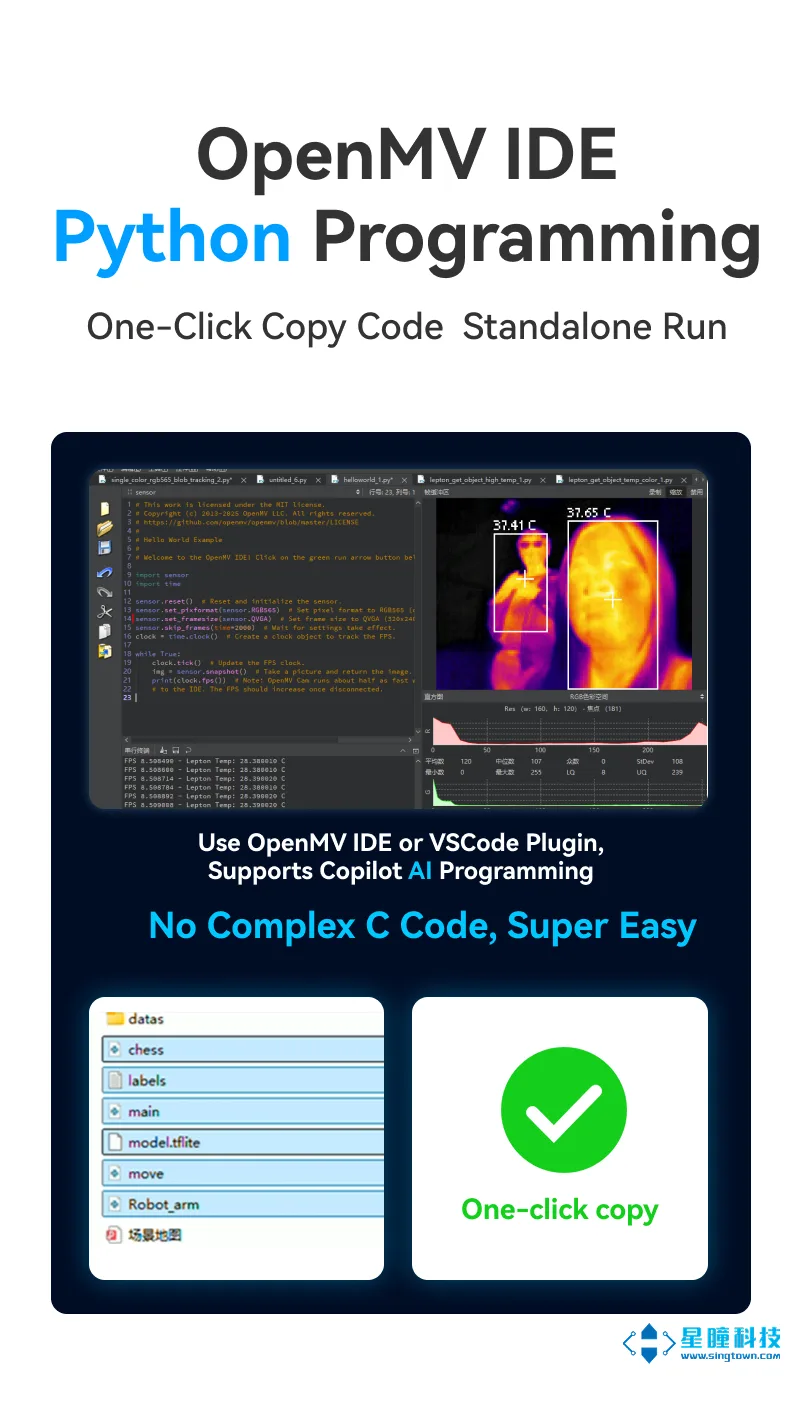



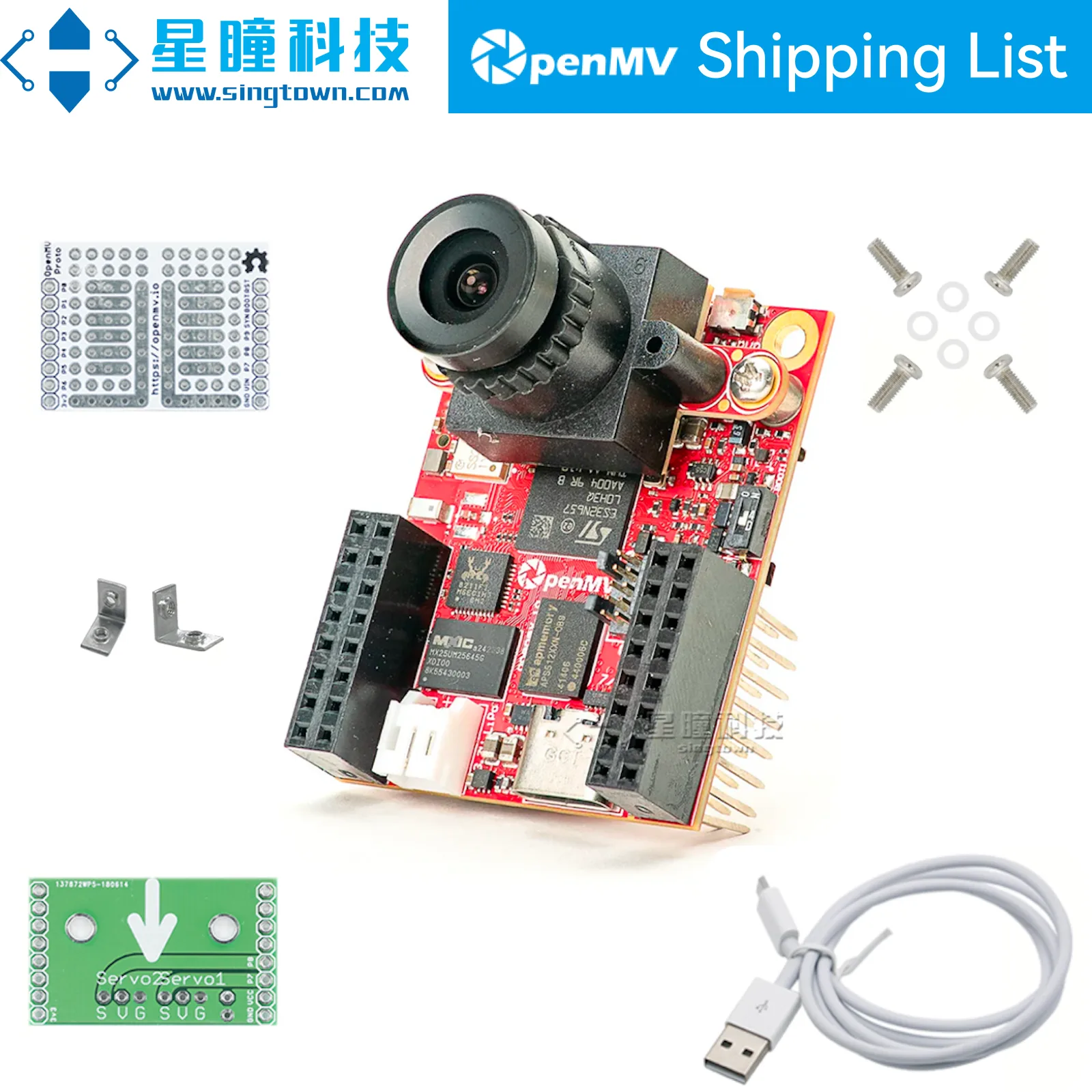
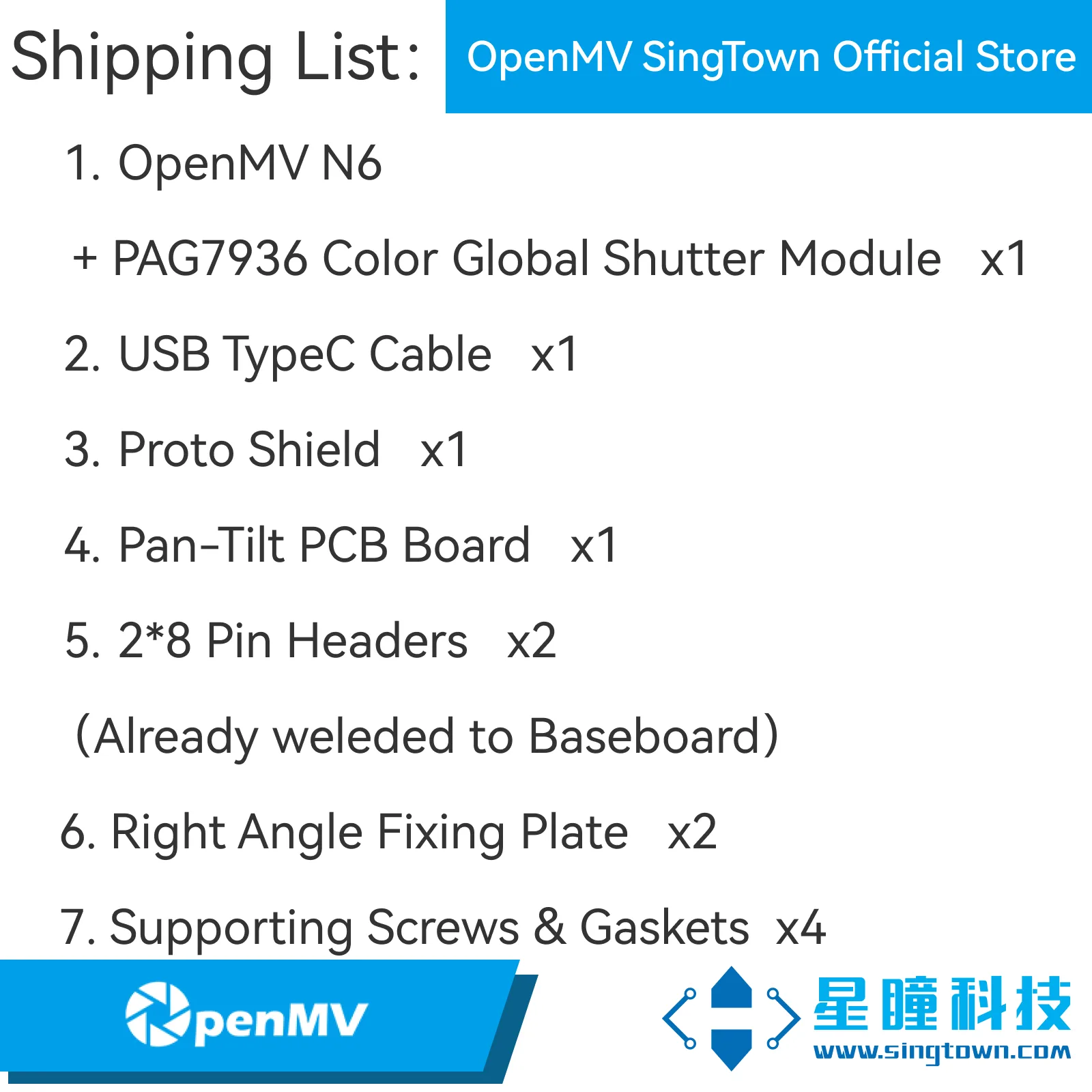
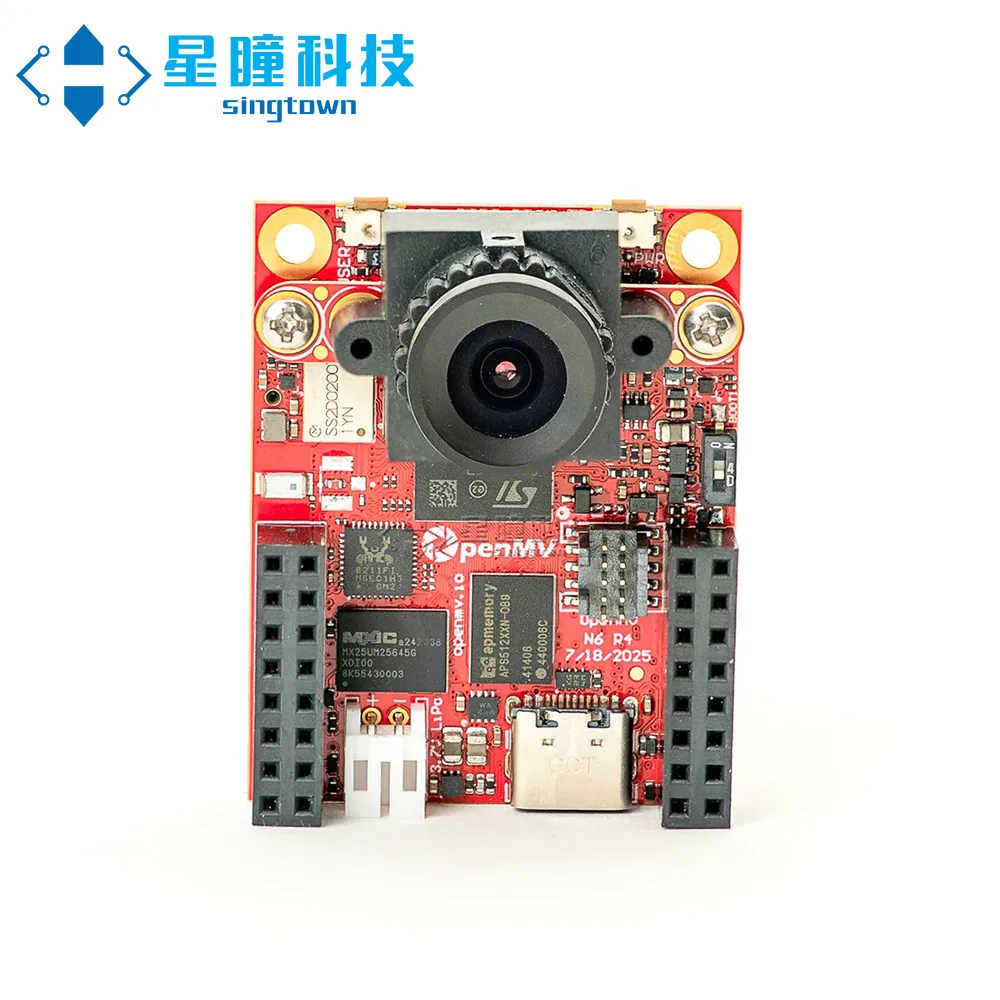
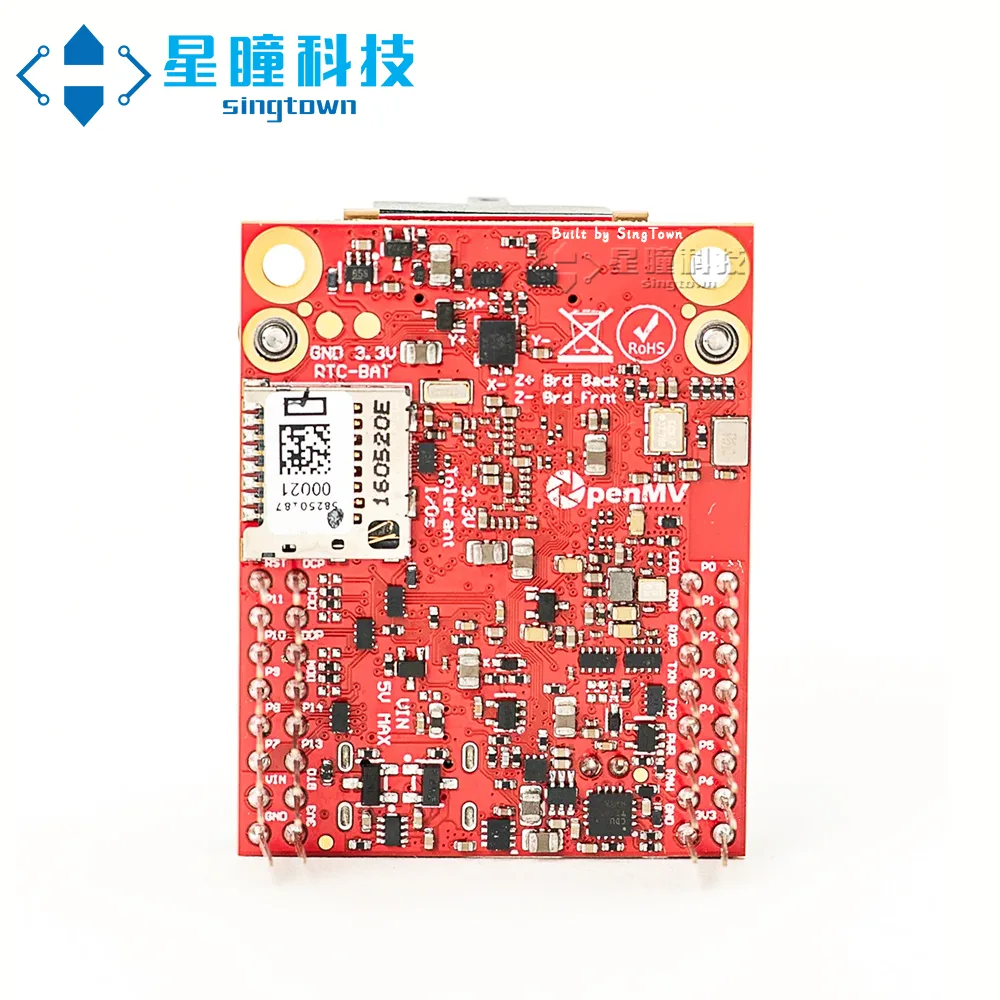
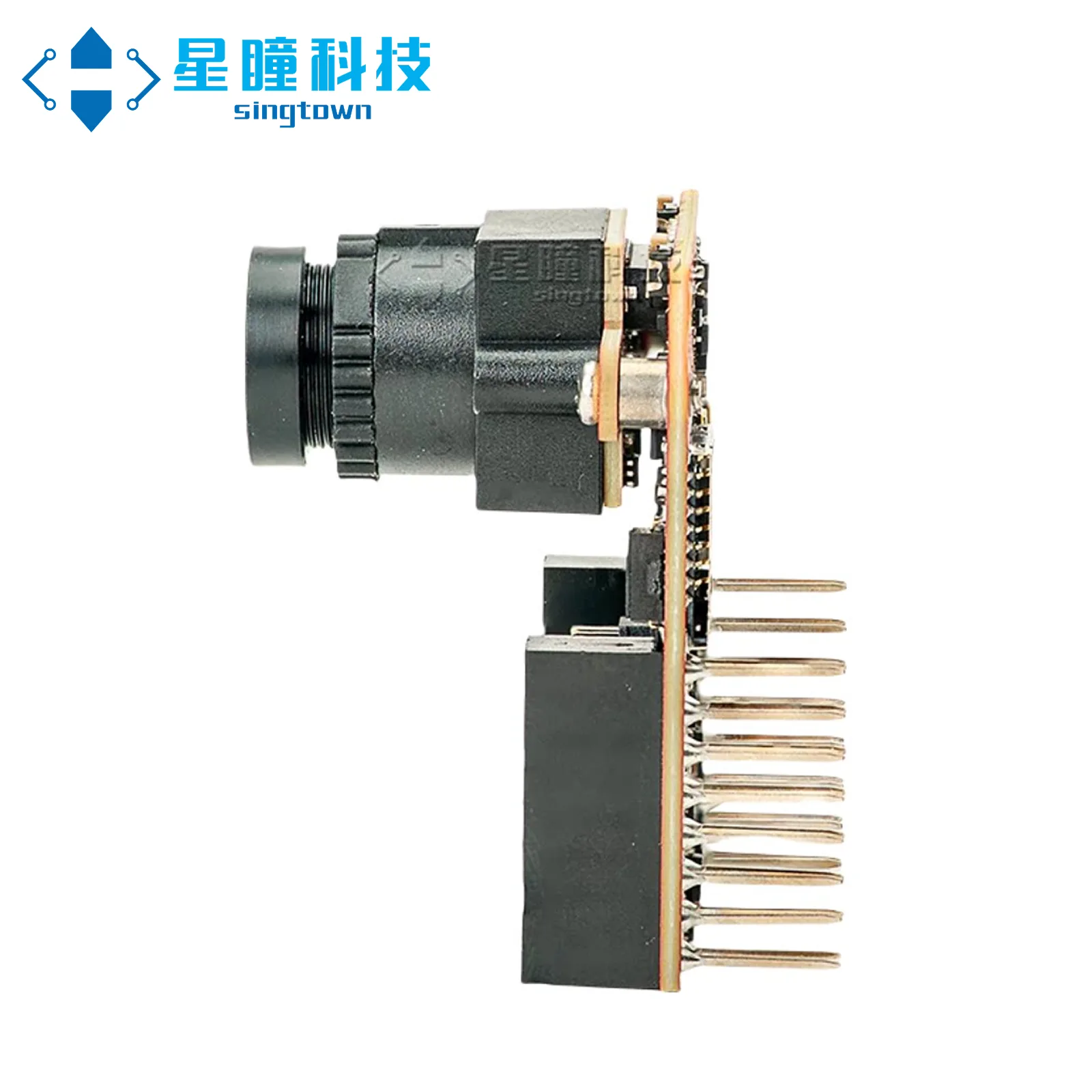
The OpenMV N6 is a small, low power, microcontroller board which allows you to easily implement applications using machine vision in the real-world. You program the OpenMV N6 in high level Python scripts (courtesy of the MicroPython Operating System) instead of C/C++. This makes it easier to deal with the complex outputs of machine vision algorithms and working with high level data structures. But, you still have total control over your OpenMV N6 and its I/O pins in Python. You can easily trigger taking pictures and video on external events or execute machine vision algorithms to figure out how to control your I/O pins.
- The STM32N6 ARM Cortex-M55 vector accelerated processor capable of up to 8 operations per clock running at 800 MHz (6.4 gigaops) with 64MB SDRAM + 4.2MB of SRAM and 32MB of program/storage FLASH. The processor features a 1 GHz NPU offering 600 Gigaops of AI/ML compute for running models - allowing you to run YOLO object detection algorithms onboard at 30 FPS, an Image Signal Processor capable of handling up to 5MP RAW BAYER Camera Modules, a GPU for graphics acceleration that can accelerate image scaling and 3D image rotation, and onboard H.264 Encode (up to 1080p) and JPEG Encode/Decode hardware acceleration. All I/O pins output 3.3V and are 3.3V tolerant.
- A high speed USB-C (480Mbs) interface: the OpenMV Cam appears as a Virtual COM Port and a USB Flash Drive when plugged in (1.5A current limited, with EMI filtering and TVS protection).
- A μSD Card socket capable of 104MB/s reads/writes which allows your OpenMV Cam to take pictures and easily pull machine vision assets off of the μSD card (with EMI filtering and TVS protection).
- Two SPI buses that can run up to 100Mb/s allowing you to easily stream image data off the system to either the LCD Shield or another microcontroller, plus one I2S Bus for an audio CODEC.
- An I2C Bus (up to 1Mb/s), an I3C Bus (up to 10Mb/s), two CAN Buses (up to 8Mb/s), and three Asynchronous Serial Buses (TX/RX, up to 12.5Mb/s) for interfacing with other microcontrollers and sensors.
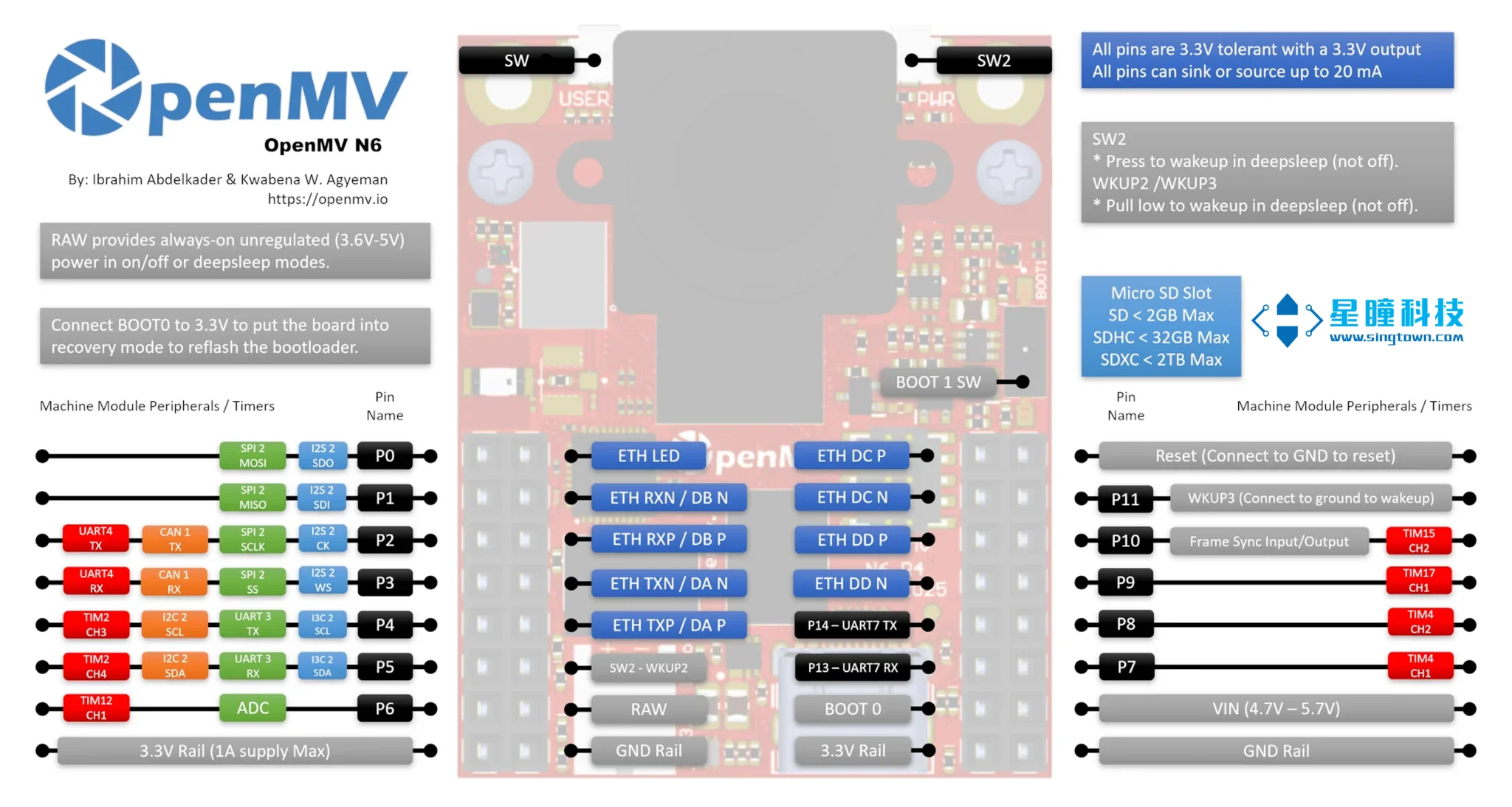
- A 12-bit ADC (3.3V tolerant); three I/O pins for servo control; one I/O pin for frame sync/triggering (or servo control); two I/O pins for low power wakeup (one shared with a button); interrupts on all I/O pins (there are 18 I/O pins on the board).
- An onboard RTC that keeps running when the system is in low-power mode, with 8KB of Backup RAM and a dedicated backup battery connection.
- A user controllable/dimmable RGB LED and a user button, plus another RGB LED for Charging, USB Power, and VIN Power indication.
- 64MB of external 16-bit SDRAM clocked at 200 MHz DDR for 800 MB/s of bandwidth; 32MB of program/storage octal flash clocked at 200 MHz in 8-bit DDR mode for 400 MB/s of bandwidth (read speed).
- An IMU (Accelerometer and Gyroscope) centered underneath the camera module.
- A Mic for recording audio and sound detection/processing.
- Onboard WiFi (a/b/g/n - 11/54/65 Mb/s) and Bluetooth (v5.1 - BR/EDR/BLE) module with a chip antenna (option to use a U.FL antenna instead).
- Onboard 10/100/1000 Mb/s Ethernet, with an Ethernet jack supporting PoE via an external shield.
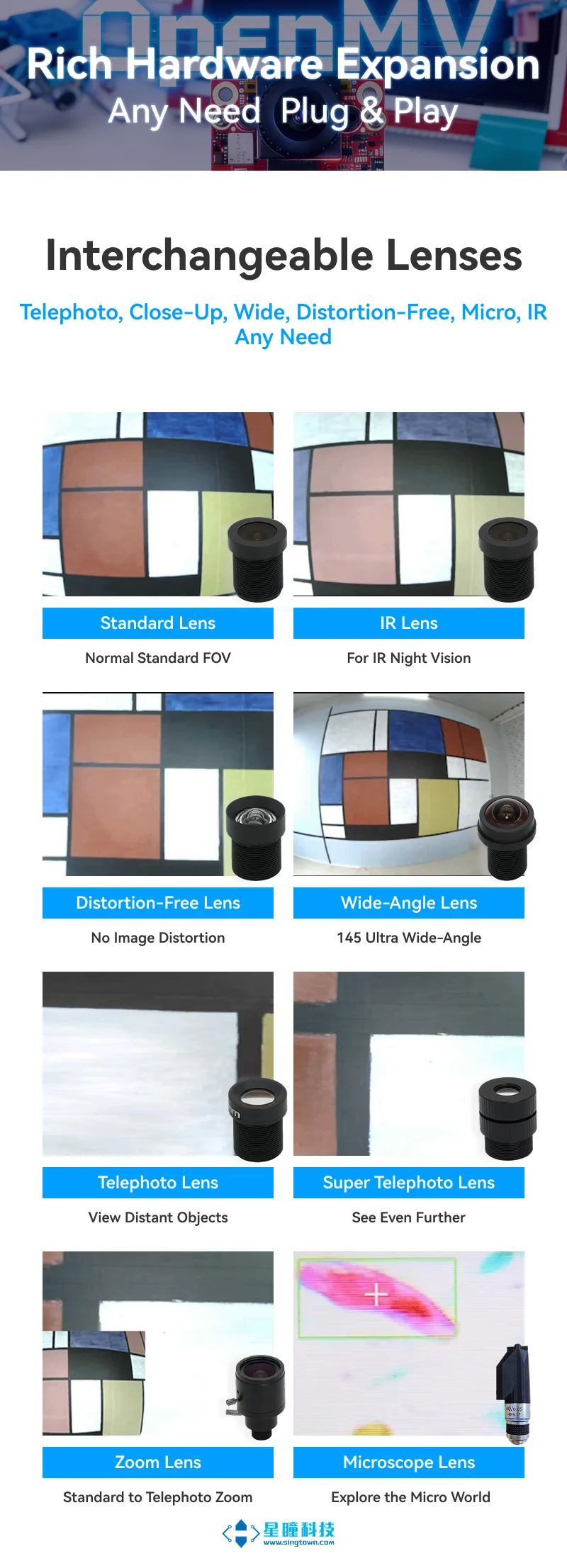
- A removable camera module system with support for MIPI CSI and 8-bit parallel, allowing the OpenMV N6 to interface with different sensors: the OpenMV N6 comes with a 120 FPS 1MP Color Global Shutter image sensor; most simple algorithms will run about 120 FPS on VGA (640x480) resolutions and below. If you want to use more specialized lenses with your image sensor, you can easily buy and attach them yourself, or you can use one of the many sensor modules in the OpenMV sensor portfolio.
- A LiPo battery connector compatible with 3.7V LiPo batteries commonly sold online for hobbyist robotic applications, with battery charging support via USB (500mA fast charge current, TVS protection, and an ADC for reading the battery voltage).
- An ARM 10-pin JTAG Header compatible with SEGGER J-Link devices for debugging and programming (with EMI filtering and TVS protection, and a BOOT1 switch for debugging).
- External 5V VIN with reverse supply protection (with TVS protection).
- OpenMV N6 Model (.step)
- OpenMV N6 3D Printable Case (.stl)
- Tripod 1/4-20 Styled Board Mount (.stl/.step)
- Tripod 1/4-20 Flat Board Mount (.stl/.step)
- GoPro Board Mount (.stl/.step)
- Battery Guide - 500 mA Charging (.pdf)
- OpenMV N6 Schematic (.pdf)
- PAG7936 Schematic (.pdf)
- Processor Datasheet: STM32N657L0 (.pdf)
- Reference Manual: STM32N657L0 (.pdf)
- Camera Brief: PAG7936 (.pdf)
- Camera Datasheet: PAG7936 (.pdf)
- Battery Charger Datasheet: BQ24075 (.pdf)
- Dual Ideal Diode Datasheet: LM66200 (.pdf)
- Ideal Diode Datasheet: LM66100 (.pdf)
- Backup Regulator Datasheet: TCR2LE33 (.pdf)
- 3.3V Regulator Datasheet: TPS62826 (.pdf)
- 1.8V Regulator Datasheet: TPS62824 (.pdf)
- Power Switch Datasheet: AP22800HB-7 (.pdf)
- VDDA Regulator Datasheet: MIC5365 (.pdf)
- PSRAM Datasheet: APS512XXN-OBR-BG (.pdf)
- FLASH Datasheet: MX25UM25645G (.pdf)
- SD Card Power Switch Datasheet: TPS22919 (.pdf)
- SD Card Voltage Switch Datasheet: SN74LVC1G3157 (.pdf)
- WiFi/BLE SoC Datasheet: LBEE5KL1YN (.pdf)
- WiFi/BLE Chip Datasheet: CYW43439 (.pdf)
- Ethernet PHY Datasheet: RTL8211FI-CG (.pdf)
- Ethernet TVS Datasheet: PUSB3BB4Z (.pdf)
- IMU Datasheet: LSM6DSM (.pdf)
- MIC Datasheet: MMICT3902 (.pdf)
- Opamp Datasheet: MCP6006T (.pdf)
- GPIO TVS Datasheet: PUSB3TB6 (.pdf)
- USB EMI Filter and TVS Datasheet: EMIF02-4CMX8 (.pdf)
- MIPI CSI EMI Filter and TVS Datasheet: EMI8143MUTAG (.pdf)
- RoHS Certificate: OpenMV N6 (.pdf)
- RoHS Report: OpenMV N6 (.pdf)
| Processor | ARM 32-bit Cortex-M55 CPU w/ Double Precision FPU, w/ ARM MVE Helium™ technology (128-bit SIMD); 800 MHz (1280 DMIPS); NPU: 1 GHz; Core Mark Score: 3616 (compare w/ Raspberry Pi 3: 3800) |
| Camera Info | PAG7936 1MP Color Global Shutter Sensor; 1280x800 @ 120 FPS; 640x400 @ 240 FPS; 320x200 @ 480 FPS; Optical Format: 1/4"; Pixel Size: 3um x 3um; CRA: 20°; SNR: 36 dB; Dynamic Range: 64 dB |
| Lens Info | Max Image Circle Diameter: 6.7mm; Focal Length: 2.8mm; Aperture: F2.0; FoV (with PAG7936 image sensor): D78.0° H68.8° V46.4°; Optical/Mechanical TTL: 17.50; Back Focal Length: 5.37mm; Flange Focal Length: 4.53mm; TV Distortion: <-24%; Relative Illumination: >70%; CRA: 14°; Storage/Operating Temperature: -40°C to 85°C; Format: 1/3"; Mount: M12*0.5; IR Cut Filter: 650nm; @420nm-600nm: Tavg > 90%; @650nm +/- 10nm: T=50%; Dust Level: IP4X; Structure: 6G + 1BG |
| Electrical Info | All pins are 3.3V tolerant with 3.3V output. All pins can sink or source up to 20mA. VIN may be between 4.7V and 5.7V. Do not draw more than 250mA from your OpenMV Cam's 3.3V rail. PLEASE NOTE THAT THE I/O PINS OF THE N6 ARE NOT 5V TOLERANT! DO NOT CONNECT THE DEVICE DIRECTLY TO A 5V MCU LIKE THE ARDUINO MEGA. You must power the N6 using VIN. The 3.3V pins are outputs only. VIN has a max voltage input of 5.7V. If you need to provide it higher than 5.7V, please use one of our new shields with 6V-36V switching regulator inputs. |
| Performance Specs | Power-on to inference result (attached to PC): ~2.5s; Power-on to inference result (stand-alone): ~1.5s; Wakeup from deepsleep to inference result (attached to PC): ~2.5s; Wakeup from deepsleep to inference result (stand-alone): ~1.5s; Bypass bootloader, power-on/wakeup to inference result (attached to PC): ~1.5s; Bypass bootloader, power-on/wakeup to inference result (stand-alone): ~0.5s; Bypass bootloader, power-on/wakeup to inference/image-save (attached to PC): ~4s (PC slows down the system while reading the mass storage); Bypass bootloader, power-on/wakeup to inference/image-save (stand-alone): ~0.75s |
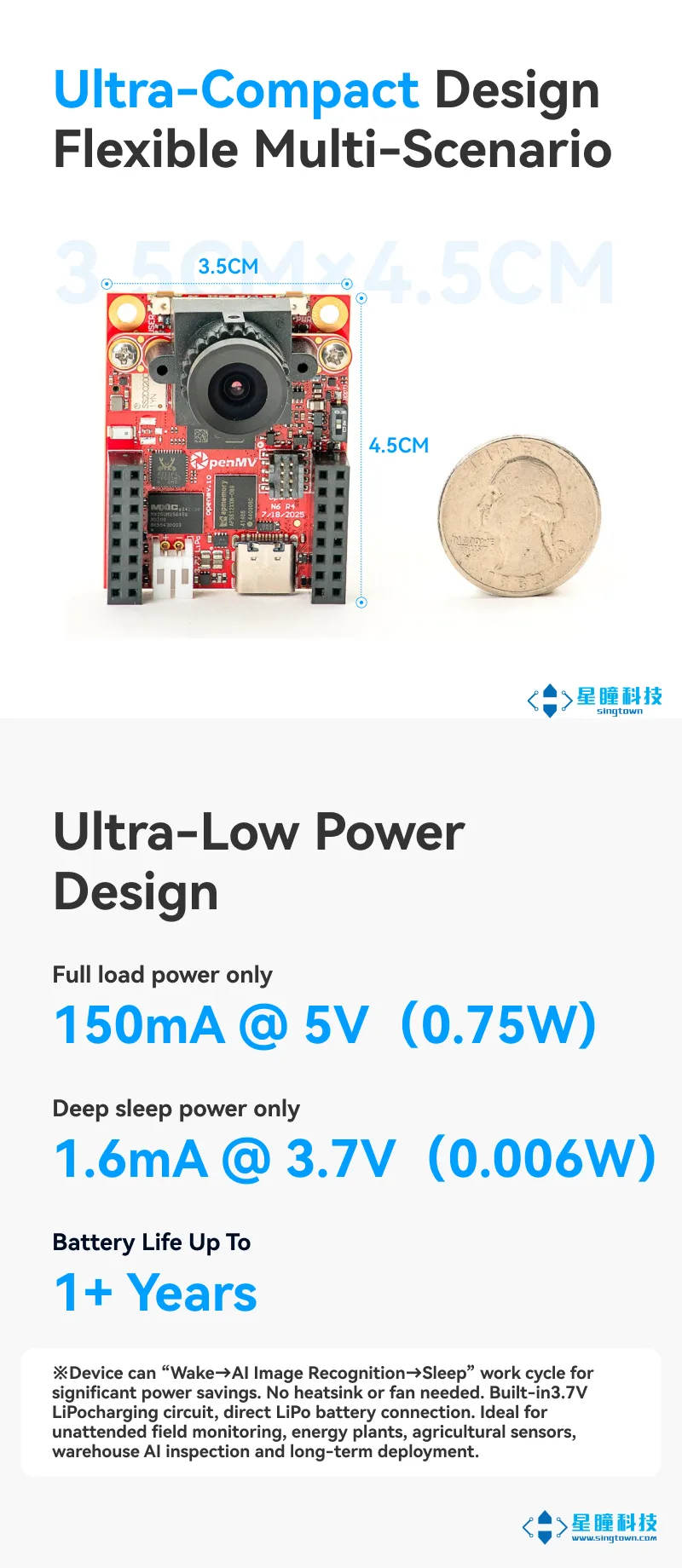
| Power Consumption | Full Power: 150mA @ 5V (0.75W); Deep Sleep: 1.6mA @ 3.7V (~6mW, via BAT connector) |
| Weight | 21g |
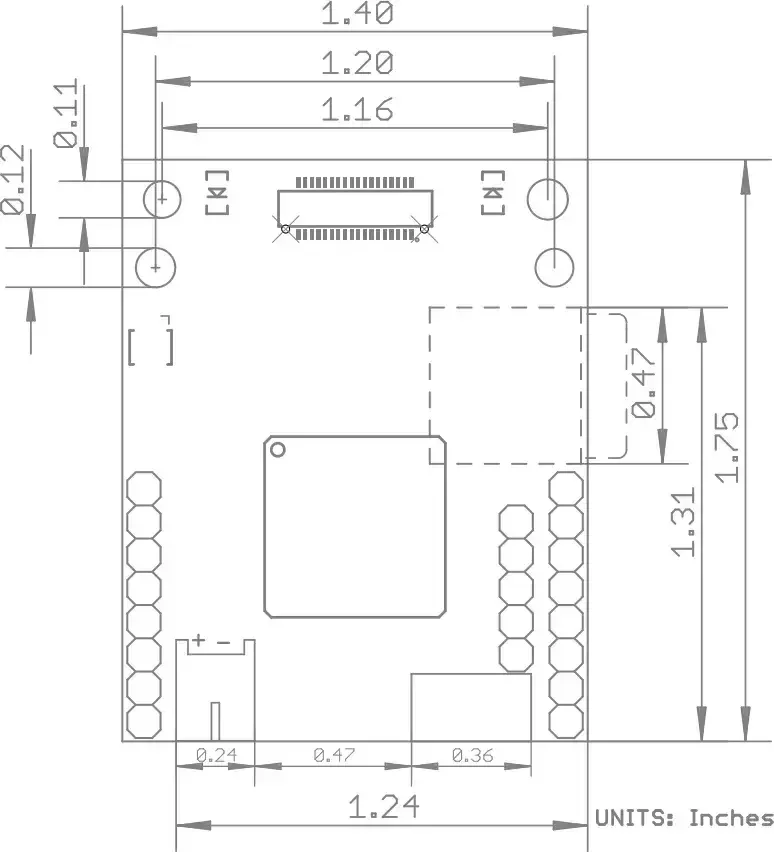
| Length | 45mm |
| Width | 35mm |
| Height | 30mm (excluding pins) |
| Storage Temperature | -25°C to +70°C |
| Operating Temperature | -25°C to +70°C |