
 OpenMV
 Shields
 Lens
Lens Robotics
 Book
Book Video
Video Download
 Docs
Docs Forum
Forum OpenMV.io
 GithubOpenMVShieldsLensRoboticsBookVideoDownloadDocsForumOpenMV.ioGithub
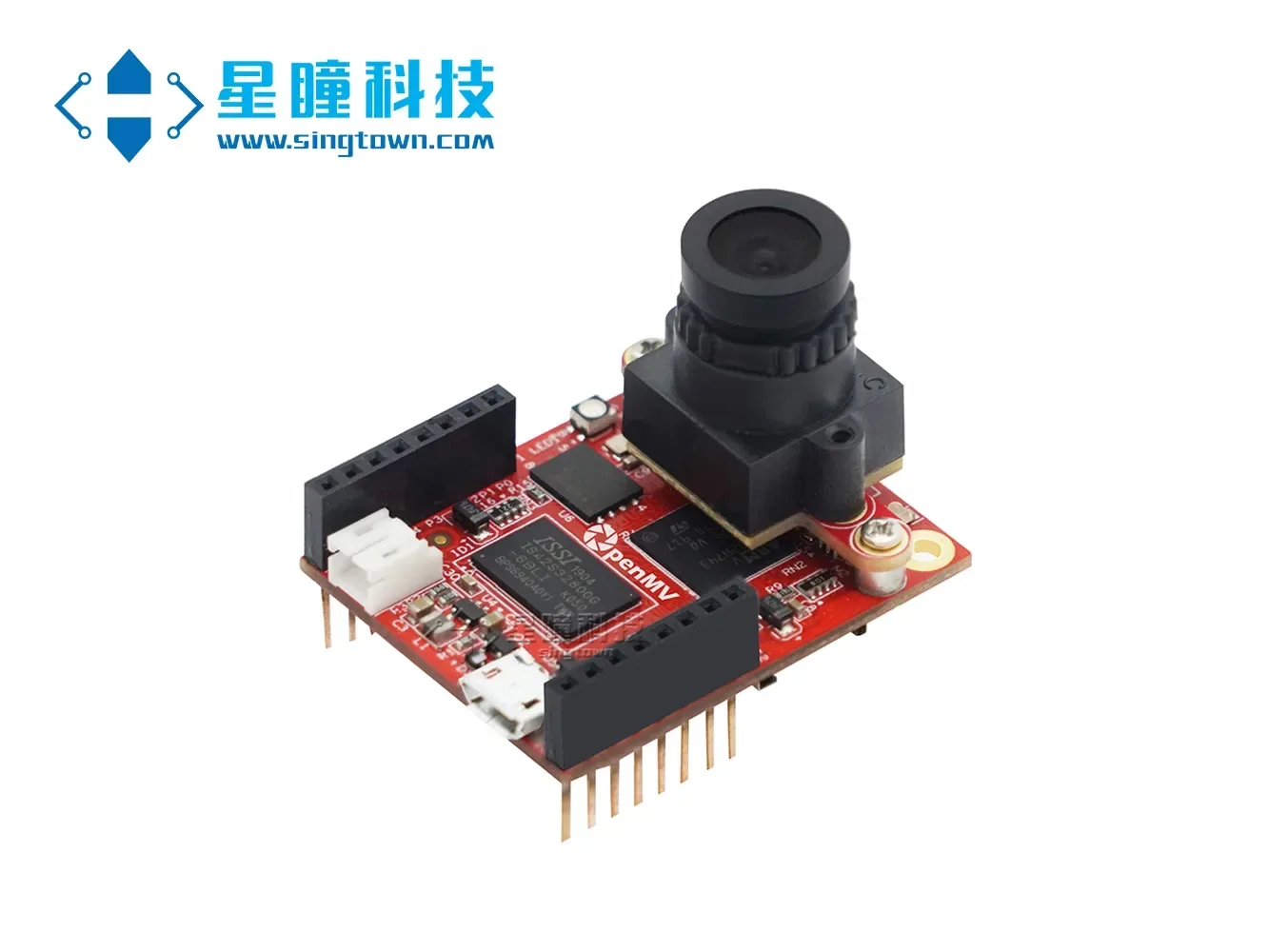
OpenMV4 Plus utilizes Edge Impulse to self-train neural networks for mask recognition.
Last April, our new product, the OpenMV4 H7 Plus, was launched. Today, I will introduce its new feature—using the EdgeImpulse online platform to independently train neural networks for classification and recognition.
In this tutorial, you will use machine learning to build a recognition system that can identify whether a person is wearing a mask through the OpenMV4 H7 Plus smart camera, thereby achieving image classification.
EdgeImpulse is a website that provides online training services for neural network models for embedded devices. It is a partner of our OpenMV and both are official partners of STMicroelectronics. Currently, EdgeImpulse is free for our OpenMV users, allowing them to train neural network models online for OpenMV at no cost.
Adding neural networks to the embedded device OpenMV enables functions such as distinguishing poachers from elephants, performing quality control on factory production lines, and allowing remote-controlled model cars to drive autonomously.
In this tutorial, you will learn how to collect images to build a high-quality dataset, how to apply transfer learning to train a neural network, and how to deploy the system to OpenMV.
Additionally, we have provided video tutorials, which can be viewed by searching for "OpenMV4 Plus Training Neural Network for Mask Recognition" on the official website.
You can view the entire project content, including all code and models, at the following address: https://book.openmv.cc/project/mask.html
Using EdgeImpulse to train neural network models online for OpenMV primarily involves the following four steps: dataset collection, upload, training, and deployment.
01. Data Collection
In this tutorial, we will build a model capable of distinguishing whether a face is wearing a mask. You may also choose to classify other objects. To enable the operation of the machine learning model, you need to collect a large number of example images of faces both with and without masks. During training, these example images are used for the model's differentiation exercises.
We need to use OpenMV IDE to collect our dataset. The steps for capturing images are as follows:
Create two categories:
Open the "Tools" menu in the OpenMV IDE, select "Dataset Editor," click "New Dataset," then create a new folder and open it. Within the dataset, create two additional folders named "mask" (for saving photos of faces wearing masks) and "face" (for saving photos of faces without masks).
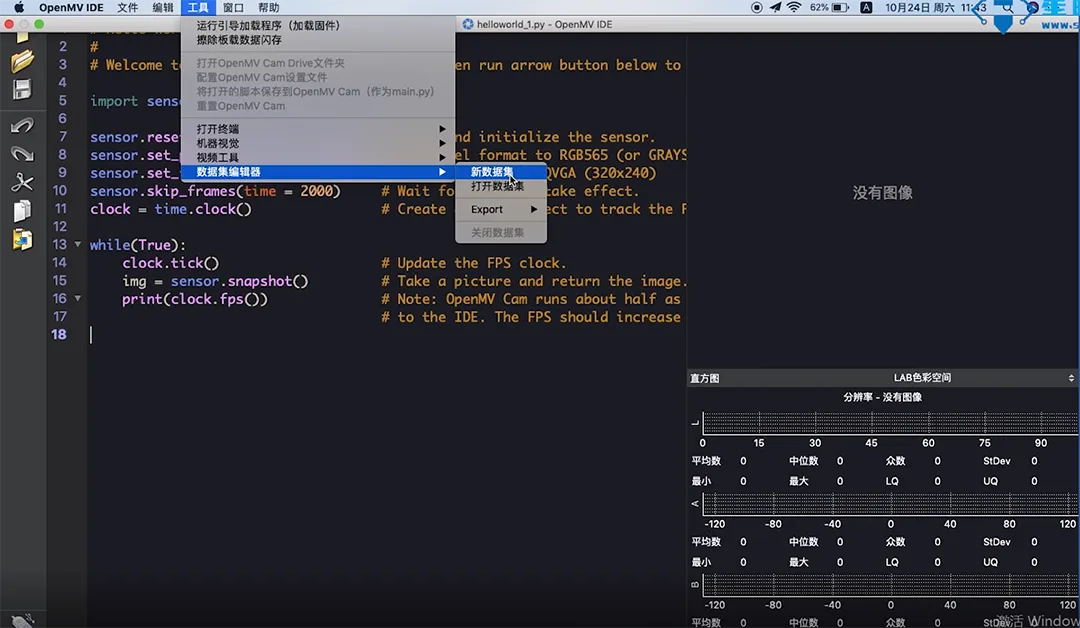
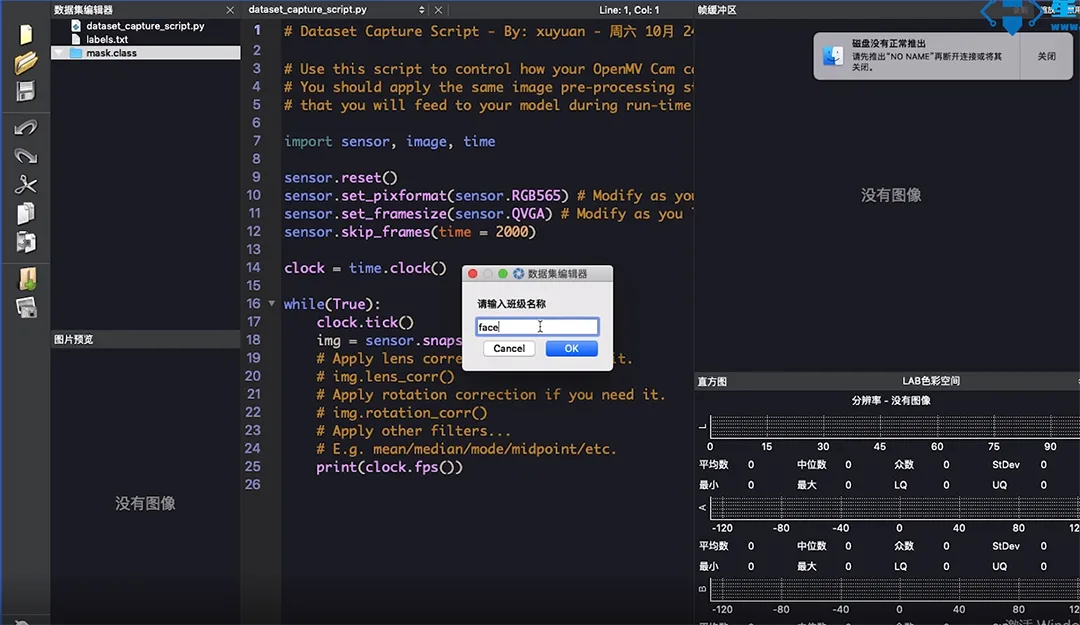
Capture images using OpenMV
First, we connect the OpenMV, click "Connect" in the IDE, then click "Run." The real-time image from the OpenMV can be seen in the Framebuffer. Click the photo button in the left menu bar, and the OpenMV will automatically save this image, which becomes one data point in the dataset.
First, we need to save the face of a person wearing a mask. Click the photo button, and the IDE will capture an image at the bottom, automatically naming it 00000. The next image will be named 00001, and so on.
Collect 200 photos of faces wearing masks (100 each for males and females) and 200 photos of faces not wearing masks (100 each for males and females) using OpenMV.
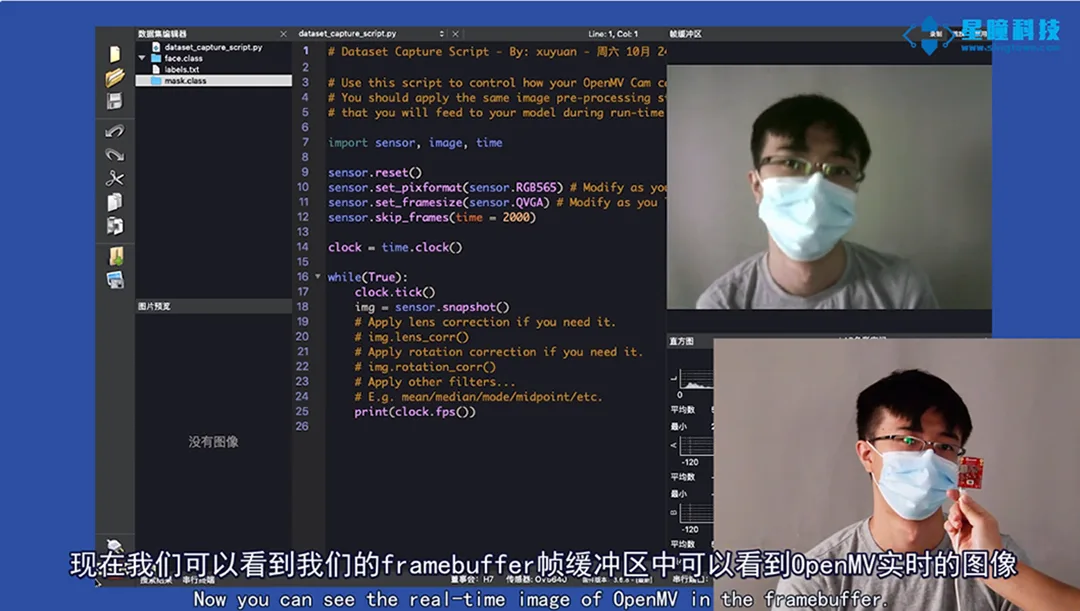
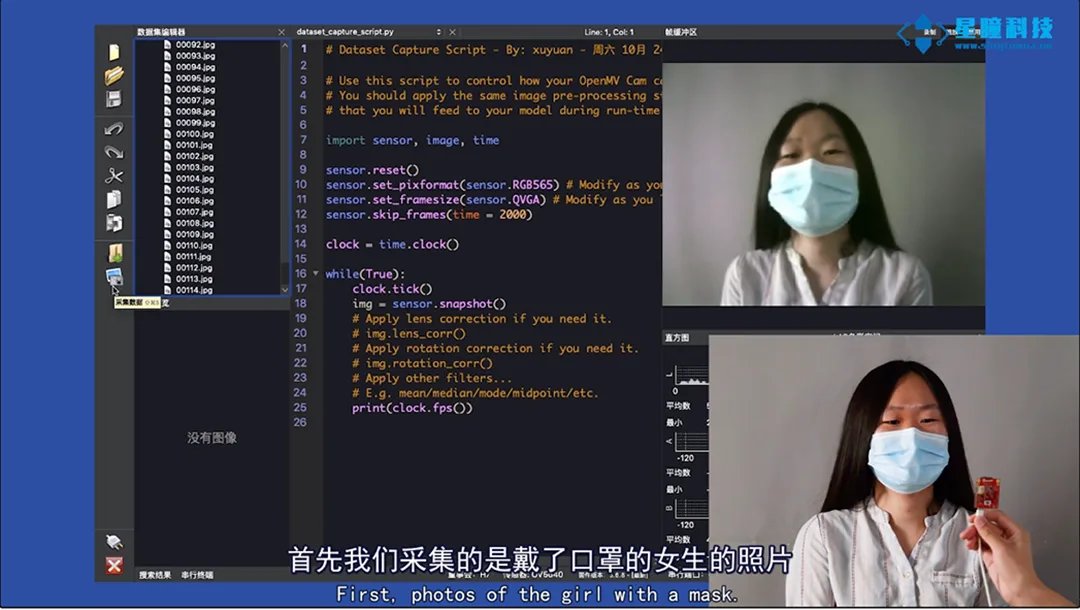
Note: Ensure that photos are captured from various angles to guarantee the diversity of our training and learning.
If an image is found to be less than perfect during the collection process, you may right-click on it and select delete.
02. Upload
After capturing images using OpenMV, you need to register an account and log in to the EdgeImpulse official website (https://edgeimpulse.com/) to begin uploading images. The steps for uploading images are as follows:
Create a new project on EdgeImpulse, click "keys", select "API Key" and copy the "API Key". Use the API Key to establish connectivity between OpenMV IDE and Edge Impulse.
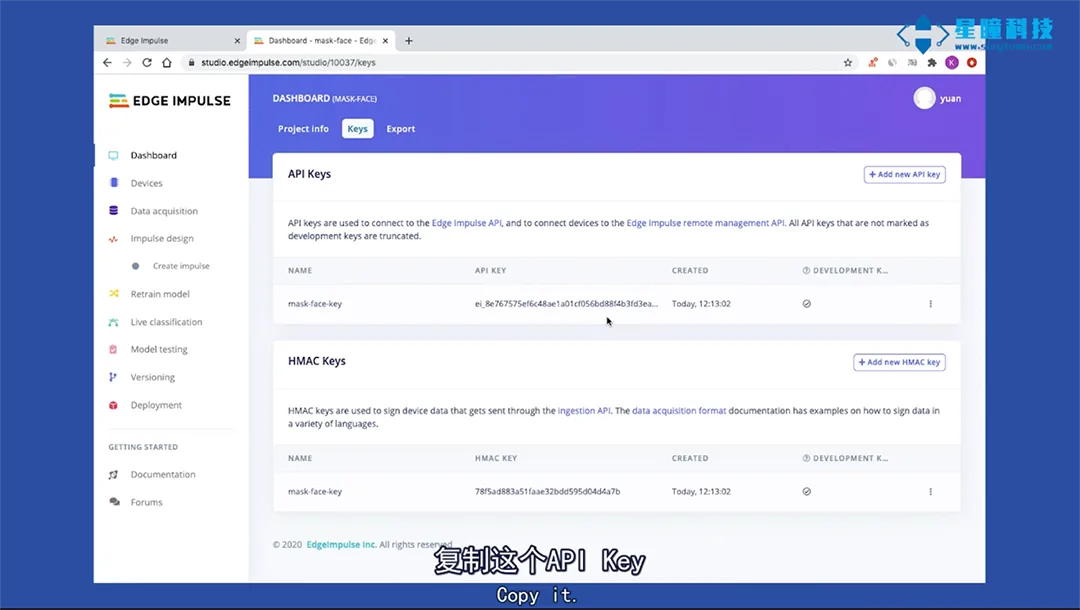
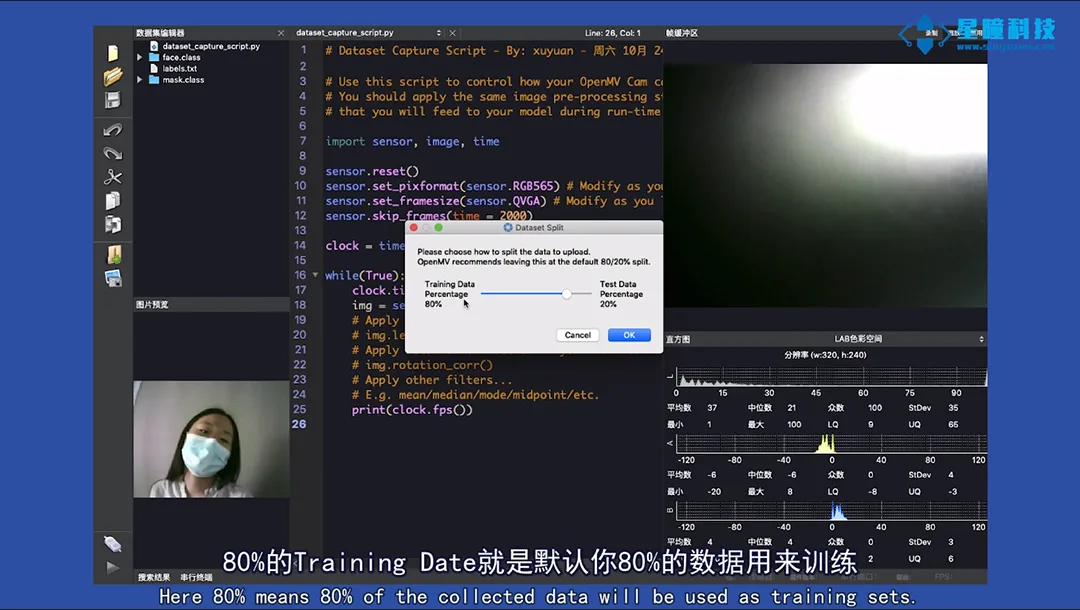
Select "Tools" – "Data Editor" – "Export" – "Upload" – "Upload via API Key" from the menu bar at the top of OpenMV IDE, then copy the "API Key" to upload.
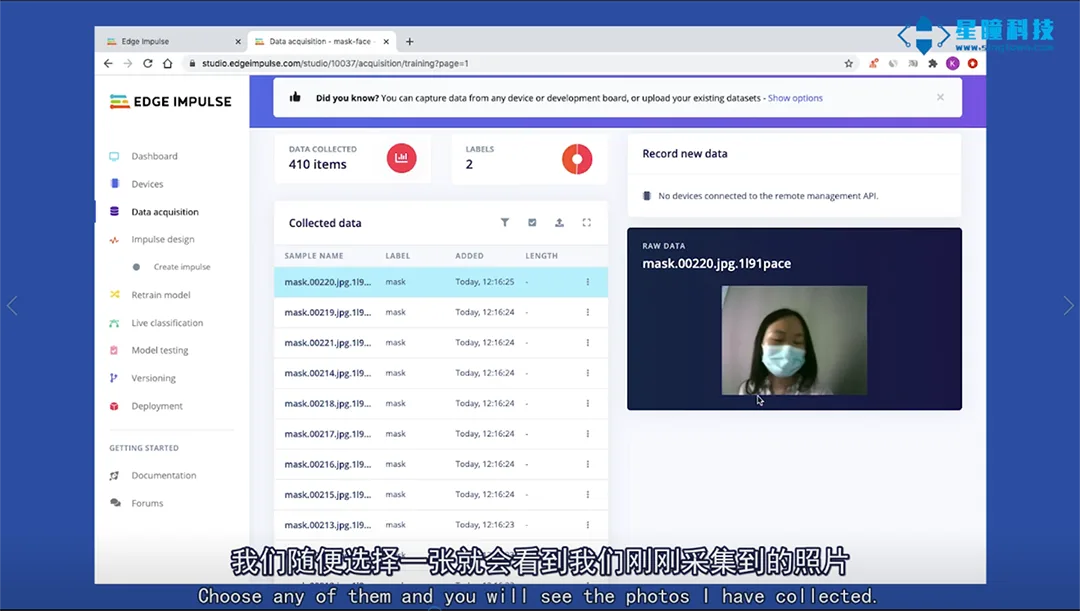
During upload, data will be automatically divided into training and test sets. The default ratio of "80% and 20%" is recommended. We have collected over 400 facial images in total, where 80% of the Training Data means that 80% of your data is used for training by default, and the remaining 20% is used as the test set.
03. Training Dataset
Once the dataset is prepared, you can train it on the EdgeImpulse website interface.
Configuration Processing Module:
First, select "Impulse Design" to configure the processing module:
Set the default image dimensions to "96 x 96".
Select the "Images" module, indicating that we are conducting classification training on images (you can also use EdgeImpulse to classify sounds, videos, etc.).
* Select "Transfer Learning (Images)" and configure the learning model.
Select "Save impulse" and a "Successfully" display indicates successful configuration.
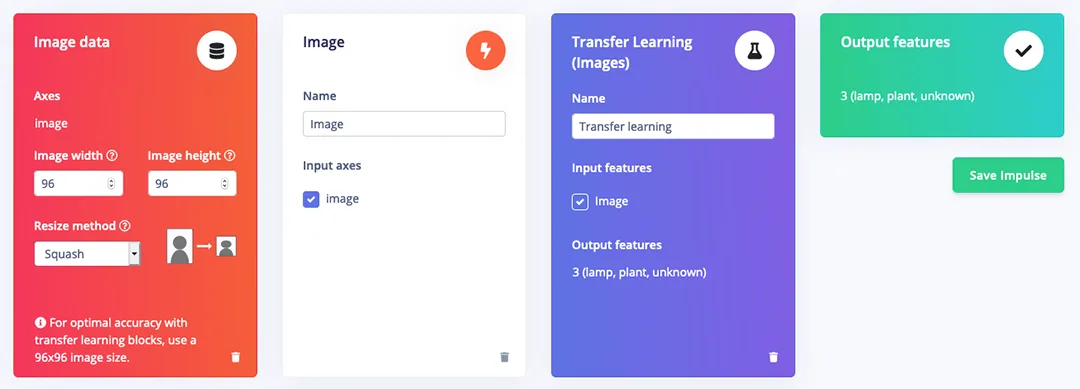
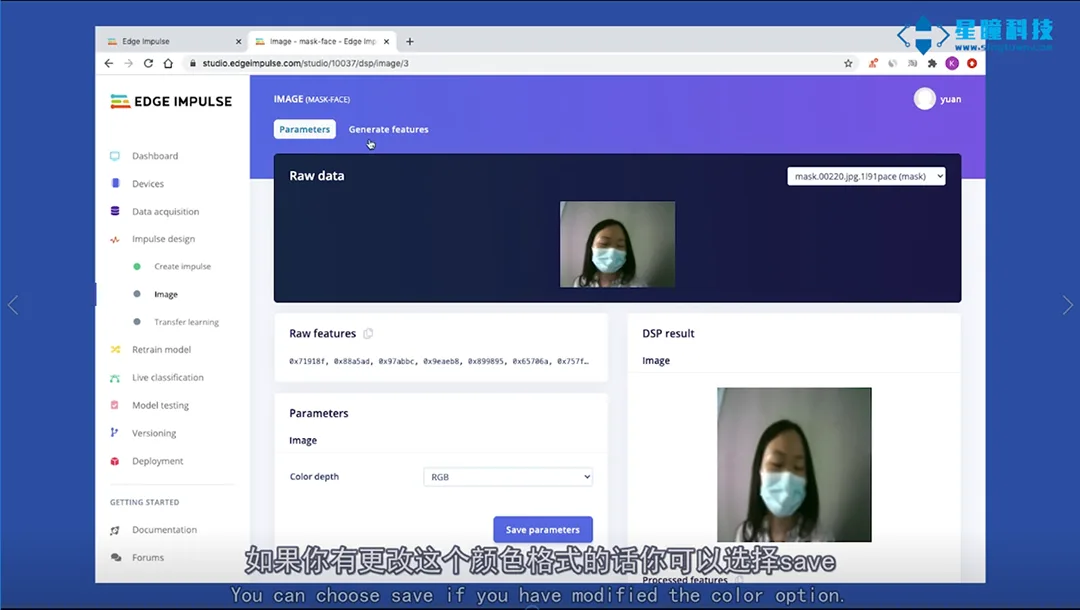
Image Preprocessing:
Click "Image" in the left menu, set the colour format to "RGB," then click "Save.
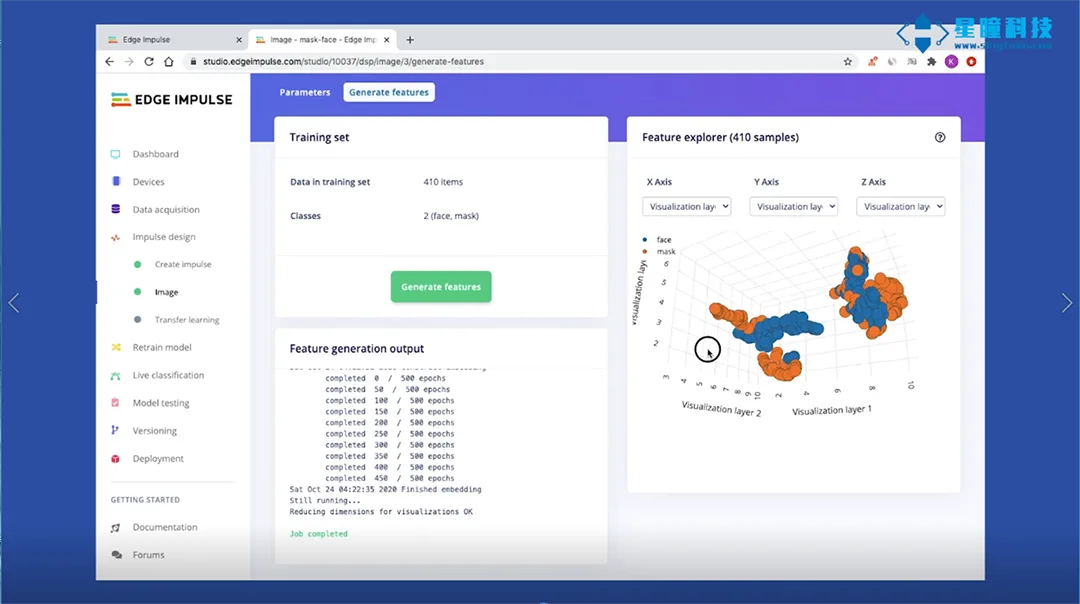
Next, select "Generate Features" to initiate the process. This will perform image preprocessing on over 400 data entries, and a 3D visualization of the complete dataset will be displayed on the right side.
Configure the transfer learning model
Click "Transfer Learning" in the left menu, select all default parameters for the settings, or modify the parameters as needed:
1. Set the default value for the Number of training cycles to 10
2. Set the learning rate to 0.0005
3. You may or may not check the "Data augmentation" option.
4. Set the default Minimum confidence rating to 0.8.
Click "Start training". The training process takes approximately 4 to 5 minutes.
After the model training is completed, you can view the accuracy, confusion matrix, and expected device performance.
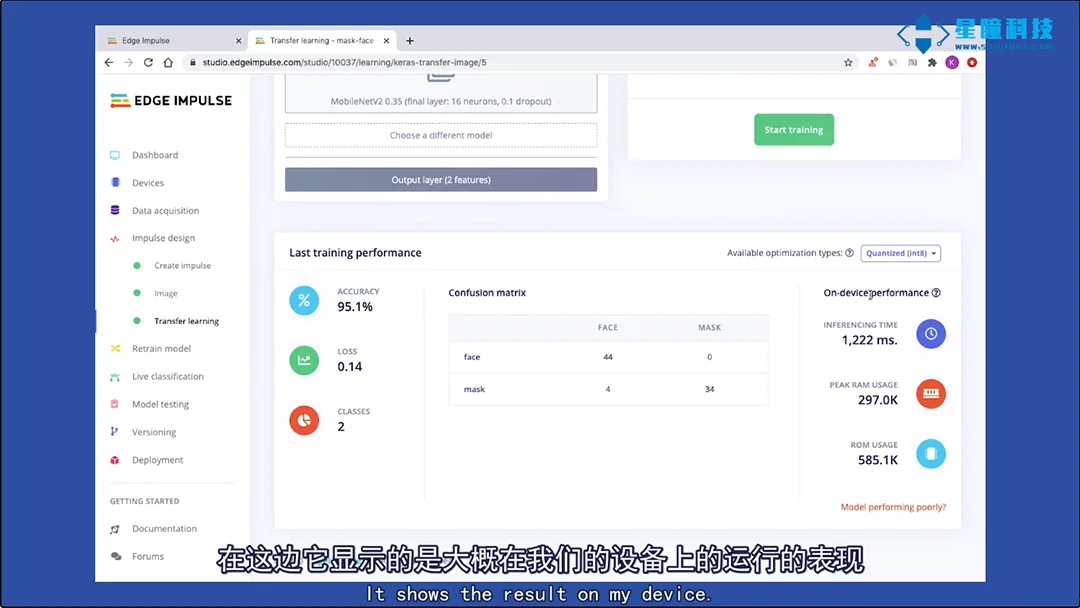
Test Model:
After training is complete, we will use test data to evaluate the model.
Select "Model testing", check the box next to "Sample name", and click "Classify selected". The accuracy displayed here reaches 97%, which is remarkable for a model with such limited data.
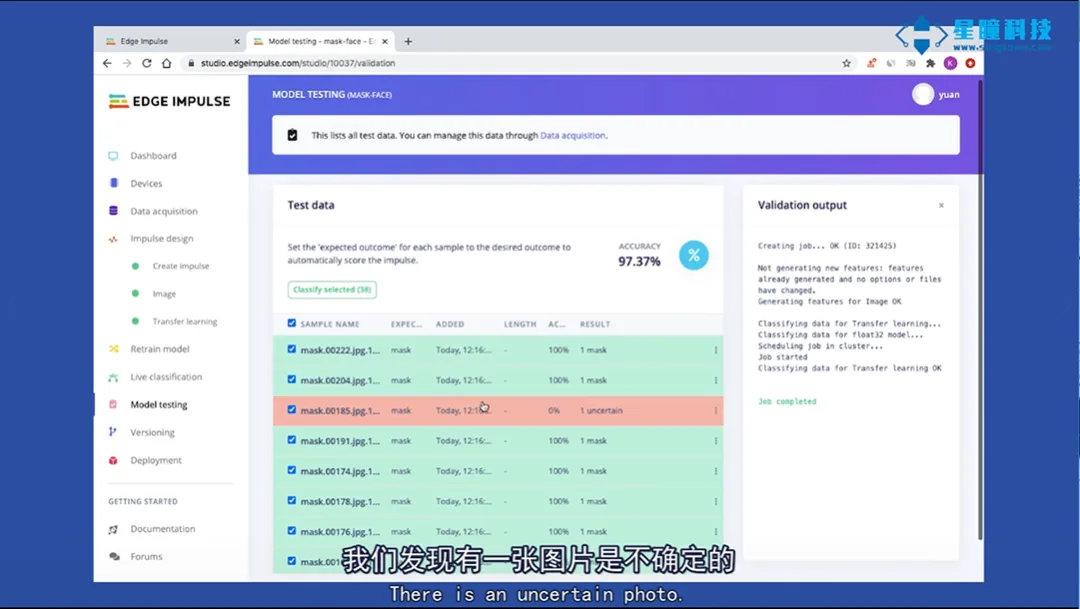
The image displayed in red indicates uncertainty. Click the three dots on the right side of this image, select "Show classification," and you will enter the "Real-time Classification" interface, which contains more details about the file. This interface will help you determine the reason for the image classification error.
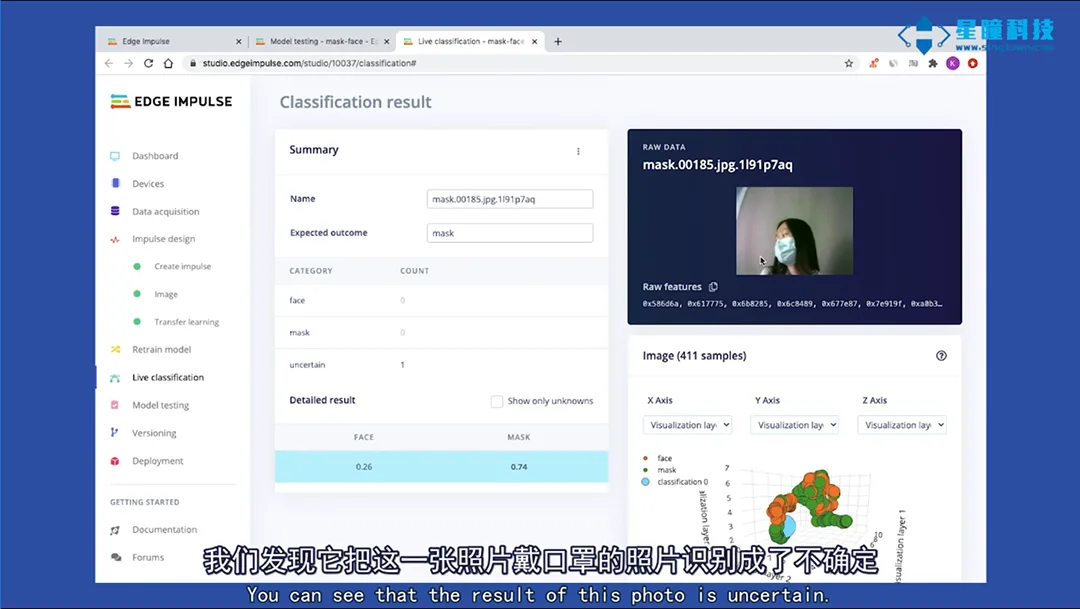
If the data falls outside all known clusters (wearing masks/not wearing masks), this may be data that does not match any previously observed classifications—possibly due to hair covering a large portion of the face.
04. Running the Model on OpenMV
After completing the steps of training design, model training, and model validation, you can export this model to your OpenMV. Select "OpenMV," choose "Build" to generate, and it will automatically create three files.
trained.tflite trained neural network model
* labels.txt two classification labels (face and mask)
* ei_image_classification.py is the code to be run on OpenMV
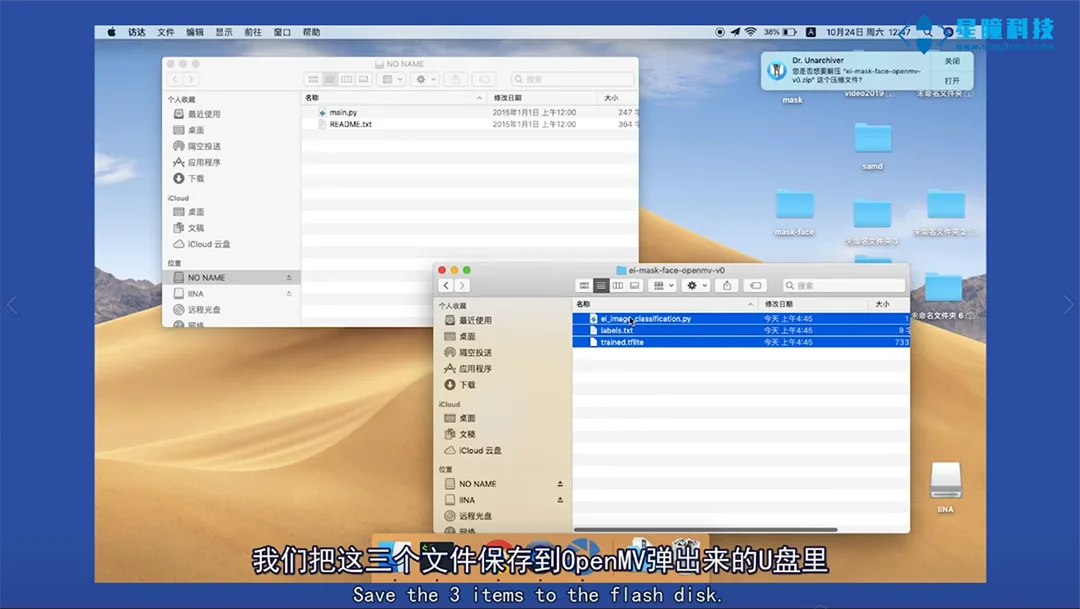
Connect to OpenMV IDE and save these three files to the built-in Flash of OpenMV. Open the ei_image_classification.py file in OpenMV IDE to view the code we just generated in EdgeImpulse. Click Run, and the operation results will be displayed in the serial terminal.
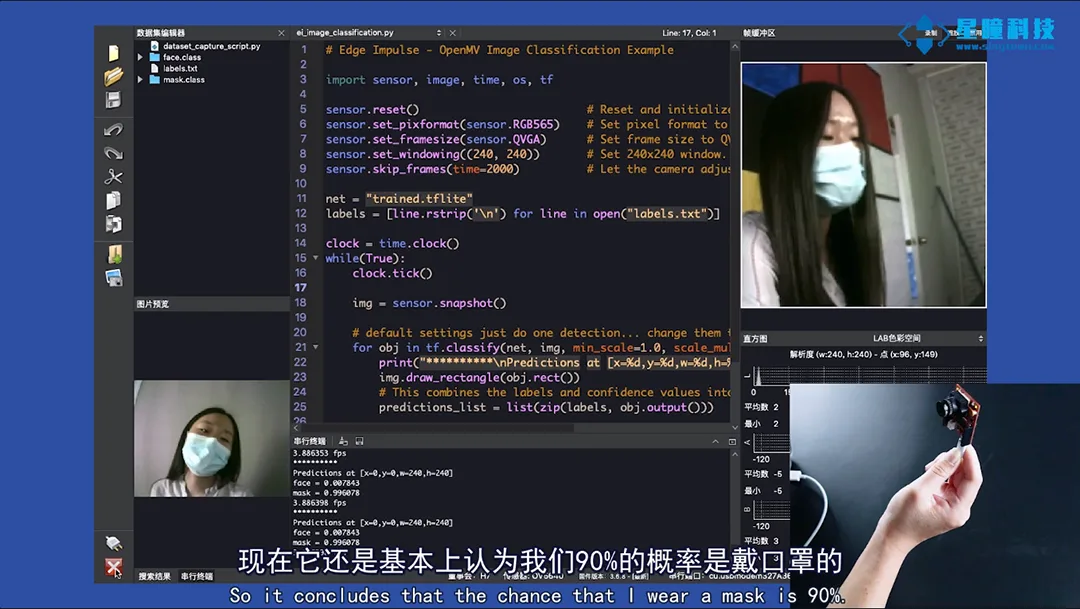
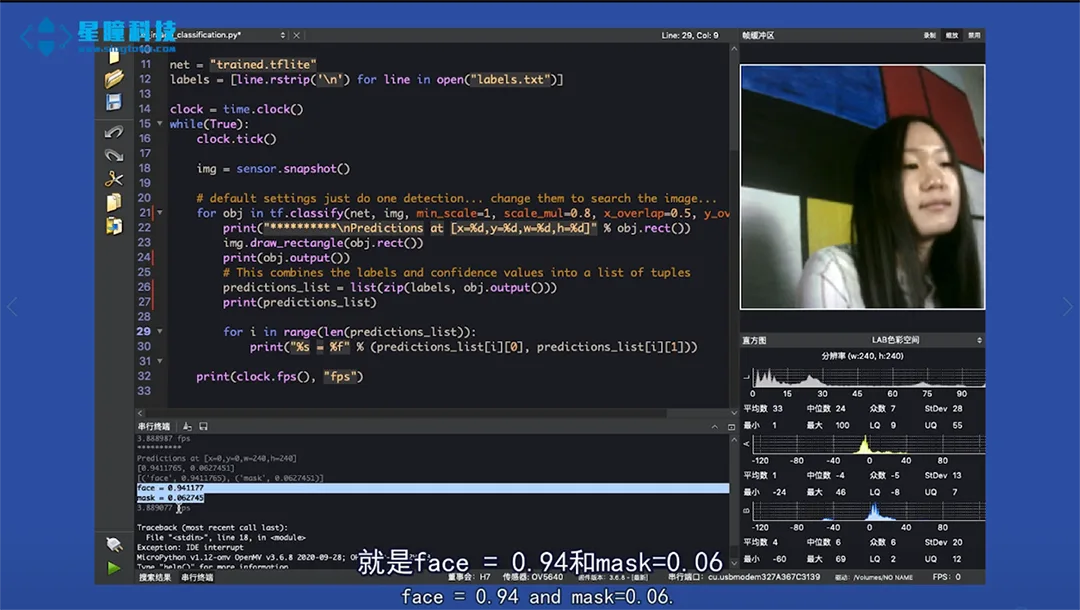
Excellent, you have successfully added the capability to train neural networks independently to OpenMV.
Looking forward to your results!
Related articles
AI Sentinel Based on OpenMV: Automatic Alert for Unsecured Key Locations
Automatically detects whether the door of a key location has remained open for an extended period and issues a timely alert.
Personnel crossing boundary triggers an alarm; OpenMV interprets the “sense of security boundary”
Detects personnel or equipment crossing virtual perimeter lines.
“AI Urban Management Officer” Is Here: An Automatic Vendors-Encroaching-on-Pavement Recognition System Built on OpenMV
Automatically identifies illegal street vending activities to support daily urban governance.
Improper placement of gas cylinders? Use OpenMV to automatically trigger hazard alerts
Automatically identifies unauthorized placements of gas cylinders to proactively detect potential gas safety hazards.
Did you perform live-line work without wearing insulating gloves? OpenMV issues an immediate alert!
Automatically identifies whether workers are wearing insulating gloves to assist with safe operations.
Utilizes the OpenMV smart camera to detect surface defects on aluminum plates in real time
Online identification of surface defects on aluminum plates, such as scratches and dents, to support quality control.