
 OpenMV
 Shields
 Lens
Lens Robotics
 Book
Book Video
Video Download
 Docs
Docs Forum
Forum OpenMV.io
 GithubOpenMVShieldsLensRoboticsBookVideoDownloadDocsForumOpenMV.ioGithub
Utilizes the OpenMV smart camera to detect surface defects on aluminum plates in real time
Once aluminum sheet surface defects enter subsequent processes, they often entail higher rework costs. Manual visual inspection is inconsistent and struggles to keep pace with high-speed production lines. OpenMV embeds defect recognition capabilities directly on the device.

During the production, processing, and subsequent surface treatment of aluminum plates, surface defects such as scratches, dents, and indentations not only affect the product’s aesthetic quality but may also adversely impact subsequent assembly, structural strength, and customer acceptance. If such defects are not detected promptly during the early stages of production, rework costs often increase, and entire batches of products may be scrapped, resulting in significant losses to the enterprise.
The traditional manual visual inspection method heavily relies on the operator’s experience and concentration, making it prone to missed defects or inconsistent judgment criteria in prolonged, high-intensity production environments—thus failing to meet modern manufacturing’s quality requirements for stability and consistency.
Based on SingTown’s OpenMV intelligent camera, continuous and stable online visual inspection can be achieved on aluminum plate production lines. The camera is installed at critical inspection points along the production line to capture real-time images of the aluminum plate surface during high-speed movement, providing clear and stable data for defect analysis.
OpenMV runs edge-enhancement, surface texture comparison, and defect feature-matching algorithms on-device, enabling fine-grained analysis of aluminum plate surfaces. By comparing normal textures with anomalous features, the system effectively magnifies subtle defects—such as scratches, dents, or indentations—that are otherwise imperceptible to the naked eye, thereby improving detection sensitivity and accuracy.
When OpenMV detects defect features that do not meet quality standards, it can instantly output recognition results at the edge and coordinate with sorting, rejection, or alarm devices on the production line to promptly isolate defective products, enabling upstream quality issue handling and preventing defects from proceeding to subsequent processes.
Since the detection logic runs entirely on the camera’s edge device, this solution does not rely on cloud computing, effectively reducing system latency and ensuring real-time responsiveness even in high-speed production line environments. OpenMV brings industrial vision inspection capabilities to the edge device, providing manufacturers with a low-latency, highly consistent, and easily deployable quality control solution to support continuous optimization and stable operation of production processes.
Related articles
AI Sentinel Based on OpenMV: Automatic Alert for Unsecured Key Locations
Automatically detects whether the door of a key location has remained open for an extended period and issues a timely alert.
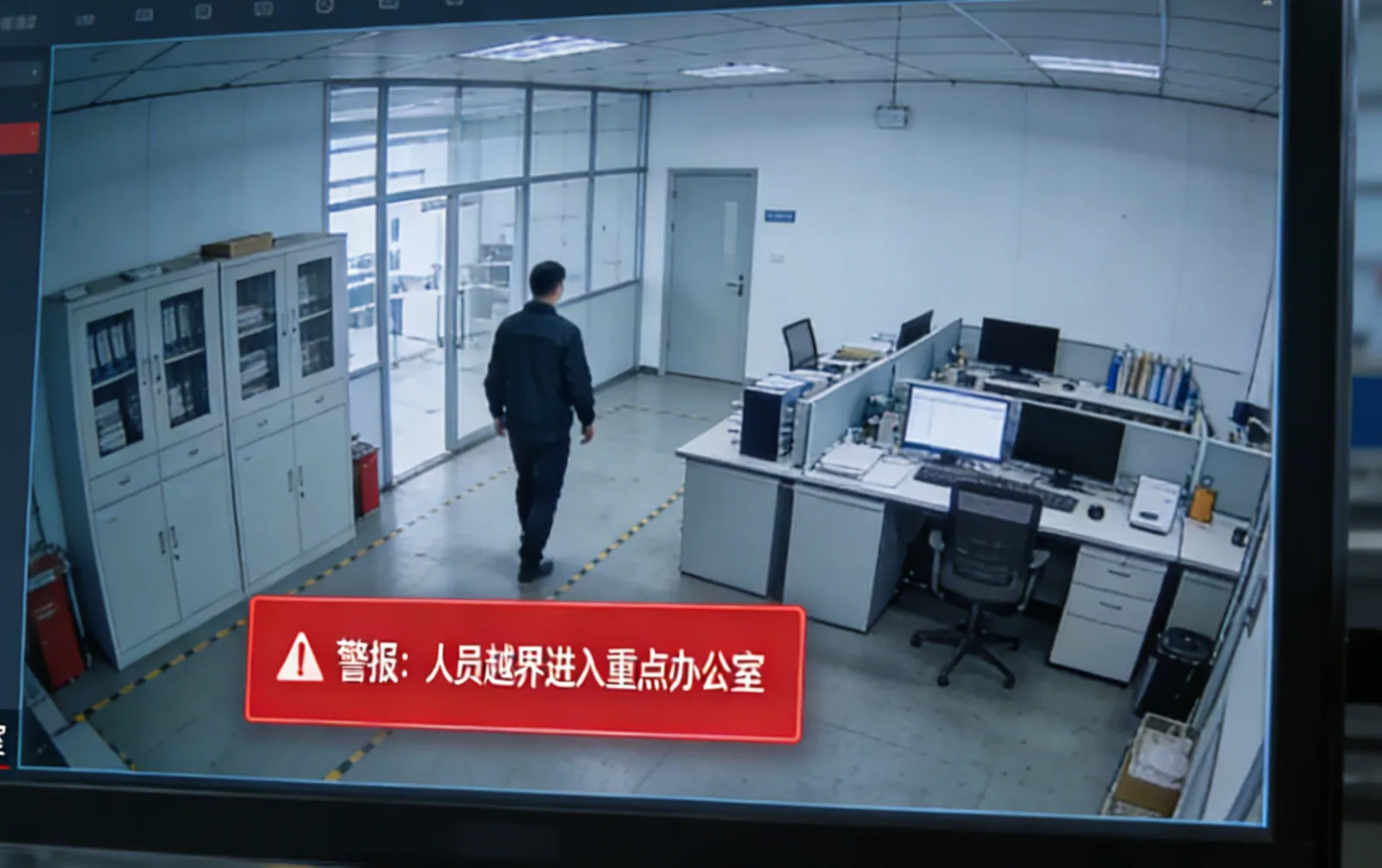
Personnel crossing boundary triggers an alarm; OpenMV interprets the “sense of security boundary”
Detects personnel or equipment crossing virtual perimeter lines.

“AI Urban Management Officer” Is Here: An Automatic Vendors-Encroaching-on-Pavement Recognition System Built on OpenMV
Automatically identifies illegal street vending activities to support daily urban governance.

Improper placement of gas cylinders? Use OpenMV to automatically trigger hazard alerts
Automatically identifies unauthorized placements of gas cylinders to proactively detect potential gas safety hazards.
Did you perform live-line work without wearing insulating gloves? OpenMV issues an immediate alert!
Automatically identifies whether workers are wearing insulating gloves to assist with safe operations.
Utilizes the OpenMV smart camera to detect surface defects on aluminum plates in real time
Online identification of surface defects on aluminum plates, such as scratches and dents, to support quality control.